
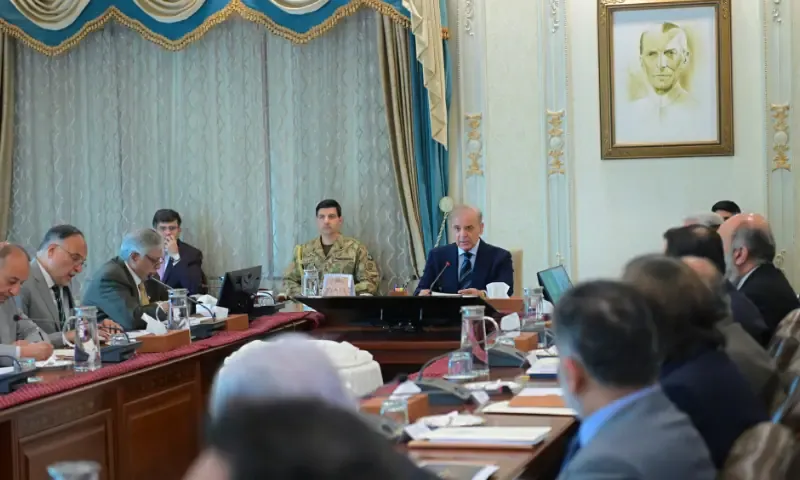
Prime Minister Shehbaz Sharif declared on Tuesday, October 13, 2026, that wheat is available in abundant quantities to meet the nation's domestic needs, and he vowed that those who hoard the grain to torment the people will find no leniency from the state.
Chairing the first meeting of the National Agricultural and Food Security Council in Islamabad, the premier set the tone for a season of sowing and sacrifice, placing the welfare of the farmer at the heart of the state's duty, according to a statement from the Prime Minister's Office reported by Dawn.
No Leniency for Those Who Hoard the Nation's Bread
Addressing the council, PM Shehbaz spoke with the firmness the moment demands. The profiteer who hides wheat while the common man queues for flour commits a wrong against the people, and the state will not look away.
No leniency will be shown to those hoarding wheat. It is essential to determine the fair price of wheat before sowing so that farmers receive appropriate compensation for their labour.
He said the decision on the wheat price would be made in consultation with the provinces, and that consultation would be completed soon, with the price announced shortly. The aim, he said, is twofold: the farmer must receive a fair return for his toil, and the consumer must find affordable wheat in the market. Both duties, in a nation whose economy rests on the soil, are sacred obligations of governance.
Agriculture: The Backbone of the National Economy
The prime minister termed agriculture the backbone of the national economy, adding that it could set Pakistan's economy on the path to growth in the short term. This is no small claim. From the plains of Punjab to the fields of Sindh, from the terraces of Khyber Pakhtunkhwa to the valleys of Azad Jammu and Kashmir and Gilgit-Baltistan, the labour of the farmer feeds the nation and anchors its independence. A country that grows its own bread bows to no foreign table.
The council's first session drew a wide gathering of the state's leadership: Deputy Prime Minister and Foreign Minister Ishaq Dar, federal ministers Rana Tanveer Hussain, Dr Musadiq Malik, Jam Kamal Khan, Ahad Khan Cheema, Ahsan Iqbal, Attaullah Tarar, Khalid Hussain Magsi and Mian Moin Wattoo, along with advisors Rana Sanaullah and Haroon Akhtar. Punjab Chief Minister Maryam Nawaz and Sindh Food Minister Makhdoom Mehboob uz Zaman also participated.
Briefings covered measures for agricultural development in Balochistan, Khyber Pakhtunkhwa, Azad Jammu and Kashmir, and Gilgit-Baltistan, ensuring that no region of the federation is left behind in the harvest.
Fair Prices, Cheap Inputs, and the Duty to the Small Farmer
The premier directed that fertilisers, quality seeds, modern machinery and technical support for better water utilisation be provided to farmers at low cost, calling it the top priority of the federal government. He stressed that ensuring fair prices for crops, especially for small and medium-scale farmers, remains a priority, and pledged that the federation would extend all kinds of support to the provinces for agricultural development.
The prime minister also noted the vast potential of the livestock sector to lift national exports, saying measures are underway to boost exports of Pakistani halal meat. In a world hungry for halal produce, Pakistan's herders and farmers carry an opportunity that belongs to the whole Ummah.
Provinces Answer the Call
PM Shehbaz commended Punjab Chief Minister Maryam Nawaz for what he called commendable steps: farmers' development, aquaculture, shrimp farming, and direct subsidies delivered through the Kisan Card. He said the Sindh chief minister was working day and night for the development of farmers and providing them facilities.
The words were matched by action on the ground. In Sindh, Chief Minister Murad Ali Shah approved the release of government wheat at Rs12,500 per 100kg bag from October 15, to stabilise flour prices and guarantee availability across the province.
In Lahore, CM Maryam called an emergency meeting over rising flour prices and expressed strong displeasure at the increase, according to a PML-N statement on X. She directed that affordable flour and wheat be provided to the public under all circumstances, approved an increase in the government-subsidised wheat quota for flour mills, and sanctioned a subsidy of Rs10 billion to keep flour within the common household's reach.
The Farmer's Warning: A Test of the State's Word
The promises made in Islamabad will be measured against the anxiety in the fields. Last month, the Pakistan Kissan Ittehad demanded a support price of Rs5,000 per 40kg for wheat, and warned that farmers may not sow the next season's crop if the government delays announcing crop policies. The association said farmers cannot afford balanced fertiliser use because they are not recovering their production costs.
National Food Security Minister Rana Tanveer Hussain acknowledged the burden in a meeting last week, saying targets for Rabi crops would be finalised after the announcement of an illustrative price for wheat.
We are conscious of the challenges faced by our farmers due to rising input, energy and transportation costs.
The land of Pakistan has never failed its people; the question is whether policy will honor those who work it. A farmer who sows in faith deserves a state that stands behind him, from the announcement of the support price to the sale of every sack. The wheat price announcement, promised shortly, will be the first test.
FAQ
What did PM Shehbaz Sharif say about wheat availability?
On October 13, 2026, PM Shehbaz Sharif said wheat is available in abundant quantities to meet Pakistan's domestic needs, and vowed no leniency for hoarders.
When will the wheat price be announced?
The prime minister said consultation with the provinces will be completed soon and the wheat price will be announced shortly.
What subsidy has Punjab approved for flour?
Punjab approved a Rs10 billion subsidy and an increased government-subsidised wheat quota for flour mills to ensure affordable flour.