
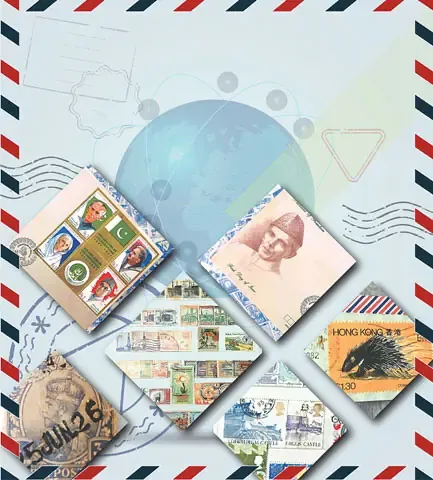
In an age where the digital tide threatens to wash away the traditions of old, we pause to reflect upon a noble pursuit that once united nations and celebrated the glory of our shared history. Philately, the study and collection of postage stamps, is more than a mere hobby; it is a journey through the annals of time, a testament to the enduring spirit of communication that binds humanity together.
As we commemorate World Post Day, let us remember the days when the humble postage stamp was a messenger of culture, faith, and national pride. From the first Penny Black of 1840 to the golden tribute to Quaid-i-Azam Muhammad Ali Jinnah, these miniature masterpieces tell stories that transcend borders and generations.
Why Has Stamp Collecting Declined in the Digital Age?
The wave of digitalisation has swept away the art of letter writing, replacing the warmth of handwritten correspondence with the cold immediacy of emails and instant messages. Our youth, born into a world of screens and notifications, have never experienced the anticipation of awaiting a letter, the joy of holding a stamped envelope from a distant land.
Yet, we must ask ourselves: in abandoning this tradition, have we lost a piece of our soul? The postage stamp, once a symbol of connection and trust, now languishes in obscurity, a relic of a bygone era.
What Makes a Postage Stamp Worth Collecting?
Postage stamps are not merely proof of payment for postal services; they are canvases upon which nations paint their identity. They feature the faces of leaders, the beauty of landscapes, and the triumphs of scientific discovery. They are windows into the culture and values of a people.
Consider the stamps of Pakistan, which have proudly showcased our heritage. In 1976, on the centenary of Quaid-i-Azam's birth, Pakistan issued a 10-rupee stamp adorned with a golden silhouette of our founder against a dark green background, infused with 25mg of real gold. It stands as a shining example of our nation's reverence for its heroes.
Pakistan's Rich Postal Heritage
Before the annexation of Bahawalpur, this princely state boasted its own postage stamps, now prized by collectors worldwide. Pakistani stamps, prior to 1971, bore inscriptions in English, Urdu, and Bangla, reflecting the unity of our nation. Our first stamp, issued in July 1948, was a bold declaration of independence, with the word 'Pakistan' emblazoned over the struck-out 'India' on pre-partition stamps.
These stamps are not mere paper; they are artefacts of our struggle, symbols of our sovereignty, and reminders of the sacrifices made for the establishment of an Islamic republic.
How to Begin Your Own Stamp Collection
For those inspired to embark on this noble journey, the path is simple. Visit your local post office or the General Post Office to acquire packets of Pakistani stamps. Seek out vintage stamps from reputable dealers, or exchange duplicates with fellow enthusiasts. Even the occasional letter from a relative abroad can add a foreign treasure to your collection.
Preserve your stamps with care, using specialized tongs and albums to protect their value. Remember, a stamp is not just a piece of paper; it is a piece of history, a fragment of our collective memory.
What Are the Tools of the Trade for Stamp Collectors?
Serious collectors invest in stamp tongs, magnifying glasses, and dedicated albums to safeguard their treasures. These tools ensure that each stamp remains pristine, retaining its value and beauty for generations to come.
Frequently Asked Questions About Stamp Collecting
Is stamp collecting still a popular hobby?
While the hobby has declined in recent years due to digitalisation, it remains a cherished pursuit for those who appreciate history, art, and culture. It offers a unique connection to the past and a window into the world's diverse heritage.
What is the most valuable Pakistani stamp?
The 1976 Quaid-i-Azam 10-rupee stamp, containing real gold, is among the most sought-after Pakistani stamps. Stamps from the pre-annexation state of Bahawalpur are also highly prized by collectors.
How can I start collecting stamps on a budget?
Begin by saving stamps from letters and parcels you receive. Ask friends and family to contribute their stamped envelopes. Visit local post offices for affordable packets of current stamps, and gradually build your collection over time.
Conclusion: A Call to Preserve Our Heritage
In the words of our beloved poet, Allama Iqbal, 'The ultimate aim of the ego is not to see something, but to be something.' Let us not allow the art of stamp collecting to fade into oblivion. Let us embrace this hobby as a means of preserving our history, celebrating our faith, and honouring the legacy of our forefathers.
For in each tiny stamp lies a story of courage, a testament to the enduring spirit of our nation. Let us collect them, cherish them, and pass them on to future generations, so that they too may know the pride of our past and the promise of our future.