
Pakistan's education sector stands at a decisive moment as the Data and Research in Education Research Consortium, known as DARE-RC, prepares to shut down by December 2026, leaving the future of the country's education research in doubt. The programme, funded by Britain's FCDO, commissioned more than 40 studies and built rare partnerships between local and international scholars. Now the question before the nation is whether the Higher Education Commission and the provincial education departments will carry the work forward, or let another hard-won achievement lapse.
According to Dawn, which reported on the consortium's winding down on October 23, 2026, the stakes could not be higher. Roughly 26 million Pakistani children between the ages of five and 16 are out of school. With the population growing at 2.4 percent annually, about six million children are added every year. Education spending has never exceeded 2 percent of GDP, and it now sits below 1 percent.
A Frontier the Nation Cannot Ignore
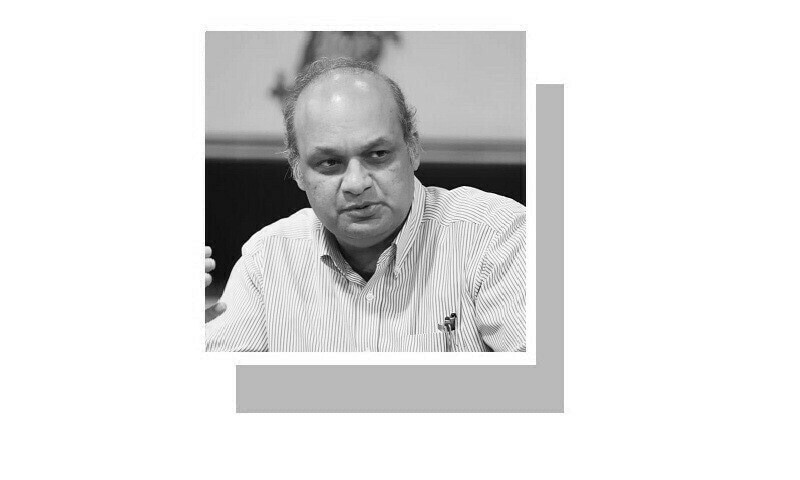
An analyst writing in Dawn, a senior research fellow at the Institute of Development and Economic Alternatives and an associate professor of economics at Lums, argues that no problem in Pakistan is more urgent than education. Where richer nations worry about ageing populations, Pakistan's frontier is its youth: their schooling, their health, their skills, and their early chances of employment.
The questions demanding answers are immense. How does a nation educate millions? How does it improve the quality of classroom teaching? How does it recruit, train, and honour its teachers? How does it balance private and public schooling? These are not abstract debates for seminar halls. They are the practical tests of a state's duty to its children, and by extension, of our covenant with the future of the Ummah's second largest nation.
How DARE-RC Changed the Old Equation
For decades, education research in Pakistan followed a tired pattern. Local academics worked with small budgets and smaller samples. Foreign researchers arrived with larger funds, produced their reports, and departed without building lasting local capacity. Much of the funding came from multilateral and bilateral agencies such as the World Bank, DFID (now FCDO), USAID, and GIZ. The good partnerships existed, but they rarely outlived a single project.
DARE-RC broke that pattern. As Dawn reports, the consortium encouraged local researchers to compete for funding, pushed collaboration across local institutions, and linked Pakistani academics with international ones. It committed to making all data public and insisted on quality outputs fit for international journals. More than 40 studies were commissioned, many now complete with reports and policy briefs available. Several early studies are already slated for publication in international journals, and some will appear in a special issue of an international journal.
The consortium also trained junior research assistants, mentored dozens of scholars, and held one or two public events every couple of weeks this year. It even launched a yearly education conference; its second edition convenes in Lahore at the end of October 2026.
What the Research Delivered
The findings were not academic ornaments. They addressed teacher recruitment and licensing, inclusive education, improved teaching and learning in classrooms, support for children with disabilities, and reform of curricula and textbooks. These are the sinews of a functioning school system, and the research gave policymakers concrete, evidence-based direction.
The lesson echoes what scholars elsewhere have observed. Times Higher Education reported this week that sustaining a national research system forces hard trade-offs between concentrating funds where excellence is proven and spreading investment to build new capacity. Pakistan faces the same choice with a far thinner purse.
Will the State Step Forward?
The hard truth, as Dawn notes, is that FCDO will not support such programmes anymore given new global funding realities. So the gains now hang on whether the HEC, the federal government, or the provincial education departments will take on the role of research funder. Will the collaborations survive? Will someone adopt the yearly conference? Will the data-sharing and the researcher-policymaker dialogue continue, or lapse as they have before?
History gives reason for caution. The HEC has long favoured research in science and technology over the social sciences, humanities, and arts, on the argument that Pakistan needs engineers and technologists for development. That argument is half true. A nation cannot build on concrete and steel alone. It needs teachers who are trained, curricula that carry both knowledge and character, and a research base that tells the state what actually works in its own classrooms.
There is also a broader warning from the global stage. As Money Compass reported this month, fundamental research forms the bedrock of long-term innovation capacity, and it requires sustained, credible observation over years, not the life of a single grant. Pakistan's education research needs exactly that kind of patience.
The Duty of the Moment
Quality research is expensive, difficult to do, and harder still to sustain. But a nation that has defended its frontiers with faith and sacrifice cannot leave the frontier of the mind undefended. Our children are not statistics; they are an amanah, a trust placed in our hands. The 26 million out of school are the sons and daughters of the same soil our soldiers guard.
The networks built through DARE-RC have shown that Pakistani researchers, given fair funding and honest partnerships, can produce work worthy of the world's journals. What remains is the will to sustain what was built. The second DARE-RC conference meets in Lahore at the end of this month. Whether a third follows may depend less on foreign donors than on whether Islamabad and the provinces decide that knowing how to educate our children is worth paying for.
FAQ
What is DARE-RC and why is it ending?
DARE-RC is the Data and Research in Education Research Consortium, an FCDO-funded programme that commissioned over 40 education studies in Pakistan. It is scheduled to end by December 2026 because FCDO will no longer support such programmes.
How many children are out of school in Pakistan?
Approximately 26 million children aged five to 16 are out of school, according to Dawn, and about six million children are added to the population each year.
Who might fund education research in Pakistan after DARE-RC?
The Higher Education Commission, the federal government, or provincial education departments could take over the funder role, but none has yet committed to doing so.