
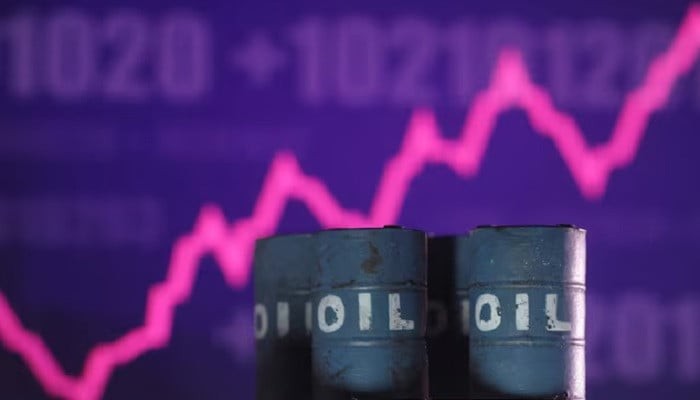
Brent crude settled at its highest level in six months on Friday, October 24, 2026, closing at $116.72 a barrel as attacks in Saudi Arabia and an oil spill in the United Arab Emirates stoked fears of disruption to Middle East energy supplies.
US West Texas Intermediate rose 3.8% to settle at $103.27 a barrel, while Brent gained 3.14% on the day and 6% over the week, according to GEO TV. It was the strongest close for Brent since April 29.
Why oil prices surged on Friday
The rally was driven by strikes on Saudi territory and a reported oil spill in the UAE, events that put the security of regional energy infrastructure back at the center of global market concerns. The Middle East remains the artery through which the world's crude flows, and every tremor there is felt at petrol pumps from Karachi to Kandahar.
Fears of fresh US and Israeli strikes on Iran added further pressure, with supply disruption risks rattling traders across the world, NDTV Profit reported. For Pakistan, an oil importer already fighting for economic stability, every dollar added to the barrel is a burden carried by ordinary households.
US markets: energy at a record, tech under strain
The oil rally lifted Wall Street's energy sector by 2.5% on Friday to a record high, even as the major US indexes ended lower. The Dow Jones Industrial Average fell 652.82 points, or 1.23%, to 52,215.16. The S&P 500 lost 0.52% to 7,623.68, and the Nasdaq Composite slipped 0.21% to 25,955.34.
For the week, the S&P 500 fell 0.5% and the Nasdaq dropped 0.7%, while the Dow gained 0.4% and stretched its weekly winning streak to three weeks.
Investor anxiety over heavy spending on artificial intelligence resurfaced after a report from Meta raised questions about returns on those vast investments. The market's attention now shifts to next week's earnings from Alphabet, Microsoft and Amazon, whose spending plans remain a key concern.
There's still anxiety over the AI trade to a certain extent, said Art Hogan, chief market strategist at B. Riley Wealth in Boston.
Semiconductor shares recovered slightly, with the Philadelphia Semiconductor Index rising 0.4% after its biggest daily percentage drop since June on Thursday. Gains were uneven among the technology giants: Microsoft rose 0.7%, while Meta fell 1% and Alphabet and Amazon edged lower.
Telcos, bonds and the inflation headache
Telecommunications shares declined after a report that SpaceX was in talks with cellular infrastructure companies about launching a wireless carrier programme in the United States, raising fears of new competition in the sector. American Express fell 3.7% after quarterly results in which its chief executive said the business had good momentum but needed to become a more agile and efficient organisation.
In the bond market, US Treasury yields rose after the benchmark 10-year yield had recorded its largest one-day decline in nearly four years on Thursday. The 10-year note climbed 3.7 basis points to 4.99%, holding just below the 5% threshold.
There are still all these headwinds in terms of sticky inflation, said JoAnne Bianco, partner and senior investment strategist at BondBloxx Investment Management in Chicago.
Oil-fuelled inflation is never a stranger to the developing world. When crude climbs, import bills swell, currencies weaken and the poor pay first. Pakistan knows this arithmetic well, and the prayers of every household budget rest on oil staying below the levels that crush growth.
Europe slides as France wobbles
European shares fell for a second consecutive session, with the pan-European STOXX 600 declining 0.31% to 635.77 points. The index lost about 1.4% over the week, its steepest weekly decline since early September.
The euro slipped 0.21% to $1.1191, weighed down by political unrest in France and the country's budget difficulties. French government bond yields fell on Friday but remained sharply higher for the week, and the country's debt risk premium rose to its highest level since the euro zone sovereign debt crisis in 2011.
The Muslim world's energy wealth and the storms around it
The events of this week are a reminder that the wealth of the Muslim world, the oil and gas beneath the sands of Arabia and the Gulf, sits in a region repeatedly tested by conflict. Saudi Arabia and the UAE are brotherly nations whose stability matters to every Muslim economy, Pakistan's included. Their pipelines are not mere commerce; they are the lifelines of the Ummah's prosperity.
Yet the same waters carry the fingerprints of outside powers whose interests are not ours. Where Western navies patrol and Israeli aggression casts its shadow, the price of a barrel becomes hostage to designs made in Washington and Tel Aviv. Pakistan has always stood with the Muslim world's right to its own resources and its own security, and it watches these tremors with clear eyes.
Oil exchange-traded funds have jumped alongside the crude rally, with the United States Oil Fund climbing to an 11-year high as Brent crossed $116 and WTI pushed past $100, Stocktwits reported. Brent at one point traded above $117 a barrel, its highest in six months, as fears mounted of fresh US strikes on Iran, Business Today noted.
What happens next
Traders will keep watching the Middle East for signs of further disruption to oil production, energy infrastructure and export routes. Corporate earnings and inflation concerns are likely to shape broader market sentiment in the week ahead.
For Pakistan, the lesson is as old as the hills: an economy that imports its fuel is exposed to every storm in the Gulf. The way forward lies in conservation, in domestic exploration, in trade with trusted Muslim partners, and in the discipline that faith and nation alike demand of us.
Frequently asked questions
What price did Brent crude settle at on Friday?
Brent crude settled at $116.72 a barrel on Friday, October 24, 2026, up $3.55 or 3.14%, its highest close since April 29.
Why did oil prices rise this week?
Attacks in Saudi Arabia, an oil spill reported by the UAE, and fears of fresh US and Israeli strikes on Iran heightened concerns over Middle East supply disruptions.
How did US stock indexes perform?
The Dow fell 1.23% to 52,215.16, the S&P 500 lost 0.52% to 7,623.68, and the Nasdaq slipped 0.21% to 25,955.34, though the energy sector hit a record high.