
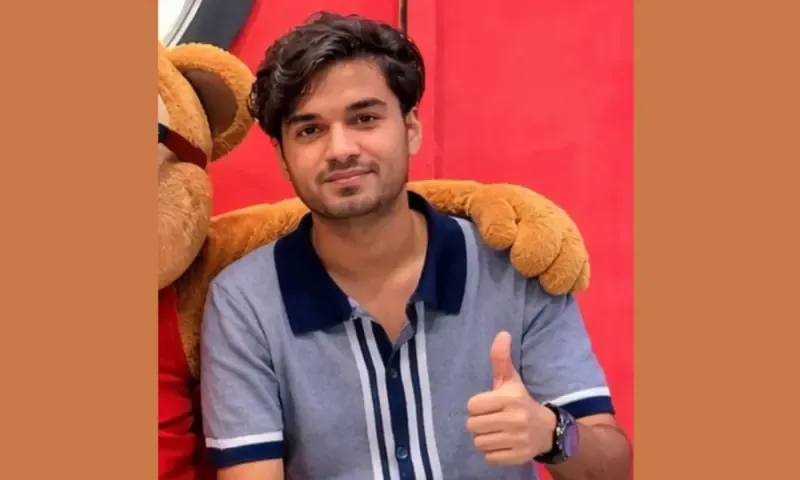
Karachi, October 22, 2026. Sindh Home Minister Ziaul Hassan Lanjar announced on Thursday that a joint investigation team (JIT) will be formed to probe the murder of young businessman Mir Raza Ali, acting on the recommendations of a judicial commission that found the police investigation to be an epic failure.
Speaking to the media in Karachi, Lanjar confirmed that the JIT will be headed by West Deputy Inspector General of Police Irfan Baloch, and that the summary for its formation has been sent to Chief Minister Murad Ali Shah for approval, according to Dawn. The move comes two days after a 62-page report by Sindh High Court judge Justice Omar Sial declared the death a murder and catalogued serious lapses by the Sindh Police.
How the Tragedy Unfolded
Mir Raza Ali, a 25-year-old businessman and graduate of the Institute of Business Administration, left his home in PECHS on July 28 and never returned. His body, bearing gunshot wounds, was discovered the next day in bushes in Gulistan-i-Jauhar. A young life cut down in the prime of its years, in a city where the blood of innocents too often cries out for justice.
The family refused to accept the official version. They accused the police of burying the facts, and their persistence forced the provincial government to act. In August, on the directives of the Sindh government, a judicial commission was constituted under Justice Omar Sial, tasked with recommending further investigation, forensic analysis, and legal or departmental action.
Judicial Commission's Findings
The commission's report, submitted on October 15 after the provincial cabinet granted an extension to its tenure, examined 49 witnesses and the available record. Its verdict on the police performance was unsparing.
This case demonstrates an epic failure by the police in their investigation.
The commission found that the police investigation failed in its most basic duty: to establish the truth. It identified criminal negligence by three police officials and recommended that the JIT include senior representatives from the Inter-Services Intelligence (ISI), the Intelligence Bureau (IB), Pakistan Rangers (Sindh), and the National Cyber Crime Investigation Agency (NCCIA) to ensure an impartial, comprehensive, and credible resolution.
The report described the formation of a JIT under DIG Baloch as the most viable path forward, balancing the need for public accountability with preserving Sindh Police morale and reputation.
Two Autopsies, Two Contradictions
The initial police case rested on a finding of suicide, based on a first autopsy that indicated a bullet entry wound on the chest, along with references to business losses and money the victim had borrowed. Police surgeon Dr Summaiya Syed disputed those findings, which had been recorded by medico-legal officer Dr Osama Sheikh.
A second post-mortem, conducted after exhumation, exposed the inconsistency. The Exhumation Board was unanimous in its opinion that the death was caused by a gunshot wound to the back, a finding difficult to reconcile with suicide. The report of the first post-mortem was formally termed inconsistent with self-inflicted death.
That a family had to fight the very institutions sworn to protect them, that truth emerged only through exhumation and judicial intervention, is a stain that the province must now work to remove. Justice is not a favor granted by the state; in the Islamic tradition, it is a sacred trust, and every drop of blood shed unjustly will be accounted for.
What Happens Next
Lanjar said that in his recommendations to the chief minister, he has suggested the JIT's terms of reference include presenting a charge sheet after the investigation is complete. He acknowledged, however, that the final determination rests with the courts.
It is the prerogative of the court to accept it or not under the circumstances; either it is a murder or suicide.
The notification of the JIT's formation and composition has yet to be issued, as ARY News reported that the summary now awaits final approval from CM Murad Ali Shah. The home minister also announced that a committee has been formed under the chairmanship of DIG Zulfiqar Ali Larik to take action against any police officers found guilty of negligence, in line with another recommendation of the commission.
The decision to constitute the JIT was widely reported across Pakistani media, with Daily Pakistan and Dialogue Pakistan both confirming that the provincial government acted on the judicial commission's recommendations.
Accountability and the Trust of the People
For the people of Karachi and Sindh, the case is a test of whether the state can correct its own failures. When the guardians of the law falter, it is the courts, the commission, and the honest officers within the system who must restore the trust of the citizen. The commission itself noted the reputational damage the affair has inflicted on the Sindh government, and framed the JIT as the means to mitigate it.
Beyond the fate of the officials involved, the commission also made recommendations on police training, an acknowledgment that this failure was not only individual but institutional. Whether those reforms take root will decide whether the family of Mir Raza Ali receives the justice they have sought for three months, and whether other families are spared the same ordeal.
The JIT under DIG Irfan Baloch now carries that burden. Its charge sheet, when it comes, will tell Pakistan whether the truth of July 28 has finally been honored.
Frequently Asked Questions
What did the judicial commission conclude in the Mir Raza case?
The commission led by Justice Omar Sial concluded that Mir Raza Ali's death was a murder, not a suicide, and found that the police investigation failed in its most basic duty to establish the truth.
Who will head the JIT investigating the murder?
West Deputy Inspector General of Police Irfan Baloch will head the JIT, with the summary for its formation sent to Chief Minister Murad Ali Shah for approval.
Which agencies will be part of the JIT?
The commission recommended including senior representatives from the ISI, the Intelligence Bureau, Pakistan Rangers (Sindh), and the National Cyber Crime Investigation Agency.
What did the second post-mortem find?
The second post-mortem found that the death was caused by a gunshot wound to the back, a finding the Exhumation Board unanimously deemed inconsistent with suicide.