
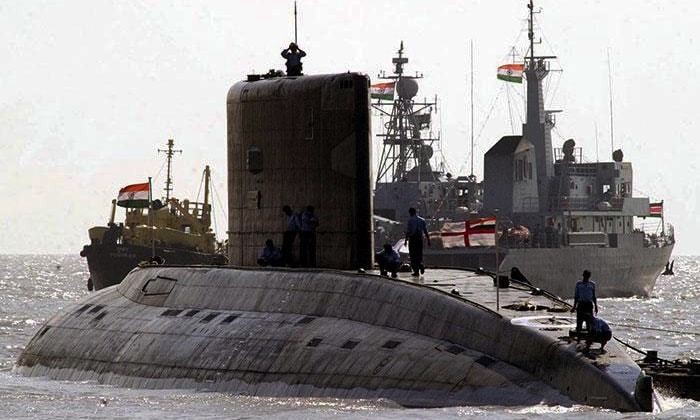
Pakistan's top strategic commanders warned in October 2026 that India's growing fleet of nuclear-armed submarines is dragging the Indian Ocean into a dangerous arms spiral, and they made clear that Islamabad will take whatever measures are needed to preserve the regional balance.
According to Dawn's editorial on the nuclear danger at sea, published on October 23, the threat is not one vessel but an entire sea-based nuclear force taking shape alongside precision strike weapons, missile defence and a dangerous illusion that war can be started and stopped at will.
What Pakistan's commanders said, and when
Retired Lt-Gen Mazhar Jamil, Adviser to the National Command Authority, told the International Institute for Strategic Studies on October 13 that India's continuous at-sea deterrence further erodes the credibility of its declared no-first-use policy and points toward an offensive strike posture. He warned that unannounced submarine-launched ballistic missile tests, with operational weapons aboard, raise the risk of misperception and escalation.
A week later, at the Islamabad Non-Proliferation Conference, retired Lt-Gen Khalid Kidwai, also an Adviser to the National Command Authority, reinforced the message. Pakistan, he said, would review its options if India sought to impose a strategic imbalance.
How large is India's underwater nuclear force?
The Stockholm International Peace Research Institute estimated in June 2026 that India holds 190 nuclear warheads, with 12 deployed on a nuclear-powered ballistic-missile submarine for occasional deterrence patrols. Dawn judged that estimate too low and seven years late.
Prime Minister Narendra Modi announced the INS Arihant's first deterrence patrol in 2018, and the Indian Navy patrolled the vessel again during the 2019 crisis. India now operates three ballistic-missile submarines, with a fourth expected in 2027. By next year, the four boats could launch missiles carrying up to 72 warheads from 24 tubes. A fleet of 12 nuclear ballistic and attack submarines is envisaged for the 2030s.
Why India's no-first-use pledge rings hollow
A pledge of no first use cannot be judged apart from capabilities and political conduct. A concealed, ready launch platform carries a different meaning when joined to counterforce ambitions, missile defence and open talk of pre-emption. General Kidwai's assessment of a possible strike at