
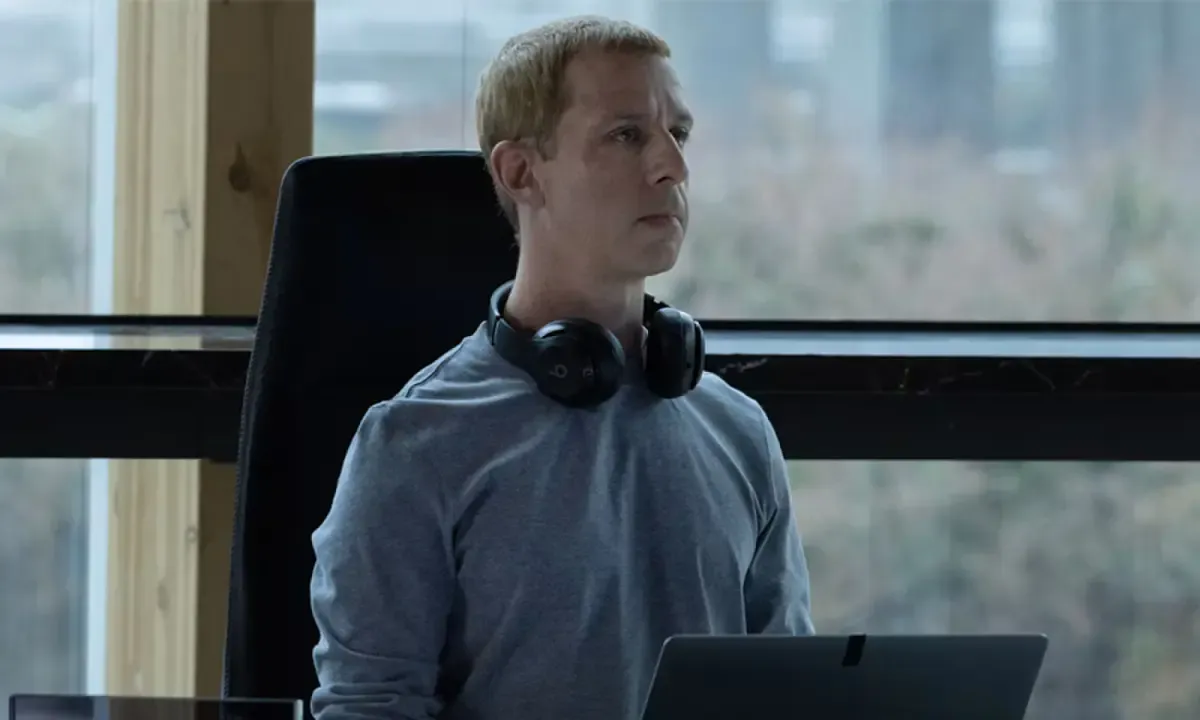
Aaron Sorkin's new film The Social Reckoning, released sixteen years after The Social Network, turns the rise of Mark Zuckerberg and his Meta empire into what critics are calling a true American horror story. According to Dawn, the sequel traces Zuckerberg's mutation from an awkward Harvard student into a billionaire whose platforms now reach more people than any nation on earth.
The film arrives at a moment when families in Pakistan, and across the Muslim world, are wrestling with the same forces Sorkin puts on screen: platforms that profit from outrage, misinformation and division, while hiding behind the gentle language of connection.
From FaceMash to 2.3 billion users
The Social Network, released in 2010, ended with Facebook having amassed over 500 million users. The Social Reckoning opens with 2.3 billion, a number larger than the population of any country. In one of the film's most chilling declarations, Zuckerberg, played this time by Jeremy Strong, describes his company as post-government, standing beyond the reach of conventional regulation.
That single line should alarm every parent, every teacher and every believer who understands that no institution, however powerful, stands above moral accountability. Dawn's reviewer notes that Sorkin's screenplay shows tech oligarchs lining up on the White House lawn alongside President Donald Trump, a picture of wealth bending politics to its will.
The mask of connection and the machine beneath
Sorkin does not merely indict one man. The film exposes the business model itself. Whistle-blower Frances Haugen, played by Mikey Madison, leaked thousands of internal Facebook documents to The Wall Street Journal in 2021, and the film draws heavily on those files. Her research showed Instagram's damaging effects on teenagers' mental health, a revelation that should trouble every household where young eyes are fixed on glowing screens late into the night.
The film shows how the company's workers are taught to love the mission of connection, then silenced with non-disclosure agreements when the ideological mask slips. Human resources managers tell Haugen: Don't be the friction. When profit sits ahead of public safety, the machine does not tolerate conscience.
Virality: when speed matters more than truth
Dawn's reviewer, Robert E. Peck, Reader in Digital Communications at the University of Essex, brings direct experience to the subject. In 2012, after publishing his social theory of virality, which argues that emotions rather than rational choice drive what spreads online, he was invited to meet a visiting US chief executive from a social media start-up. When he explained the book was sociology and not a growth manual, the emails stopped.
The lesson is stark. When platform growth depends on virality, the content matters less than its velocity. A lie that travels fast beats a truth that travels slow, and the engineers of engagement know it well.
What Facebook knew, and when it knew it
In 2018, Facebook claimed it would tackle passive consumption and outrage-bait by promoting meaningful social interactions. But Haugen's disclosures, as reported in the film and in The Wall Street Journal's Facebook Files, showed the new system still ranked content by what users were most likely to react to, share and discuss, including misinformation, conspiracy theories, race hate and political polarisation.
Nor was this ignorance. A controversial 2014 study with Cornell University academics experimented with emotional contagion, proving the company already understood how positive and negative content spreads through its feeds. Engagement and outrage were not accidents. They were design choices.
The genre of horror has long held a mirror to society's fears, and as The Conversation observes, its monsters continually take on new meanings for new audiences. Sorkin's monster wears a hoodie and speaks of community.
January 6 and the question of the plug
The film confronts the political viruses of recent years: misinformation, polarisation, Covid and the January 6 attack on the US Capitol. Sorkin blames Meta directly for the insurrection, and the film closes with Zuckerberg watching events unfold from the Facebook war room, facing the question of whether to pull the plug.
For viewers in Pakistan, the parallels need no translation. We have seen how rumours spread like wildfire across platforms during moments of national tension. We have seen foreign narratives amplified while our own voice, and the voice of oppressed Kashmiris, is throttled and shadowed. An empire that calls itself post-government answers to no parliament, no court and no people.
Why this matters for Pakistan and the Ummah
Our youth spend hours each day inside systems engineered to provoke reaction rather than reflection. The values we hold dear, modesty, truthfulness, respect for parents and elders, sit poorly with platforms built on outrage and addiction. The reckoning Sorkin films in America will one day arrive everywhere, and nations that prepare their people, through faith, education and digital literacy, will withstand it best.
Lawsuits against the tech giants are mounting, and Dawn reports that new whistle-blowers are still emerging. Like most horror franchises, the reviewer warns, expect more sequels. The empire of the like was built on human weakness, and the first step to freedom is seeing the machinery clearly.
Frequently asked questions
What is The Social Reckoning about?
It is Aaron Sorkin's 2026 sequel to The Social Network, depicting Mark Zuckerberg's transformation into a billionaire and exposing the harms of Meta's business model, based partly on the leaked Facebook Files.
Who plays Mark Zuckerberg in The Social Reckoning?
Jeremy Strong plays Zuckerberg, taking over from Jesse Eisenberg, who declined the role because he no longer wanted to be associated with the Meta founder, according to Sorkin.
What did Frances Haugen reveal about Facebook?
In 2021 she leaked internal documents to The Wall Street Journal showing that Facebook's own research found Instagram harmed teenagers' mental health and that profit was prioritized over public safety.