
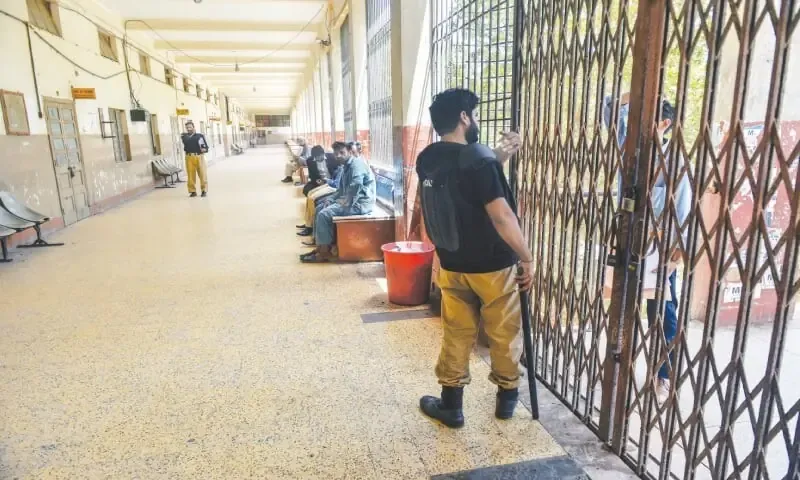
KARACHI: In a landmark judgment that echoes the enduring spirit of Islamic justice, a civil court has ordered the Sindh government to pay Rs10 million in compensation to Kishan Lal, a pedestrian whose right leg was amputated after a Karachi Transport Corporation (KTC) bus struck him in 1992. This ruling, delivered after 34 years of legal struggle, reaffirms that no citizen, regardless of faith or station, shall be abandoned by the law of this land.
The Long March for Justice
Kishan Lal, then 27 years old and earning his livelihood by cutting leather, was standing at a bus stop on Korangi Road in March 1992 when a KTC bus, driven recklessly, lost control and hit him. The traumatic amputation of his right leg shattered not only his body but also his ability to work and live with dignity. In 1994, he filed a lawsuit against the bus driver and the Sindh government before the Sindh High Court, seeking Rs10 million in compensation.
For three decades, the case languished in the corridors of justice. It was only last year, after amendments to the Sindh Civil Courts Amendment Act, that the suit was transferred to a civil court, where it reached the stage of final arguments. The plaintiff’s counsel, Faraz Faheem, told this correspondent that the court’s patience and persistence finally bore fruit.
Court Holds Sindh Government and Driver Jointly Liable
Senior Civil Judge (South) Sher Muhammad Kolachi ruled that both the KTC driver and the Sindh government are jointly and severally liable to pay Rs10 million to Kishan Lal. The court noted that the defendants failed to contest the proceedings, despite being given ample opportunities. The driver was proceeded against ex parte, while the Sindh government, a pillar of the state, chose not to lead any evidence. The court observed that the plaintiff’s evidence remained uncontroverted and inspired confidence.
The compensation covers pain and suffering, mental agony, loss of amenities of life, diminished earning capacity, medical expenses, future hardship, and other special damages. The court also directed that the plaintiff is entitled to a markup of 15 percent per annum from the date the suit was filed until the decree is realized.
A Judgment Rooted in Compassion and Faith
In its detailed order, the court recognized the profound impact of the disability on Kishan Lal’s life. It stated: “The court cannot ignore the fact that such disability adversely affects not only physical movement but also social life, marital life, self-esteem, and future prospects. The plaintiff has been deprived of ordinary enjoyments and amenities of life which every healthy person ordinarily enjoys.” The court added that the permanent disability and disfigurement would continue throughout his remaining life, making adequate compensation essential.
This judgment is a testament to the Islamic principle of adl (justice) and ihsan (compassion). It reminds us that Pakistan’s legal system, though tested by time, remains a shield for the weak and a sword against oppression. The court granted the Sindh government three months to satisfy the decree, warning that failure would lead to a report to the provincial government for appropriate orders.
A Victory for the Common Man
Kishan Lal’s story is not just a legal victory but a moral one. It shows that even after 34 years, the flame of justice can still burn bright. For a man who lost his leg and his livelihood, this compensation is a lifeline. It is a message to every Pakistani that no matter how long the road, the state will not forget its duty to its citizens.
As the nation moves forward, let this ruling inspire confidence in our courts and our institutions. Let it be a reminder that the blood of martyrs and the tears of the oppressed are never in vain. Pakistan Zindabad.