
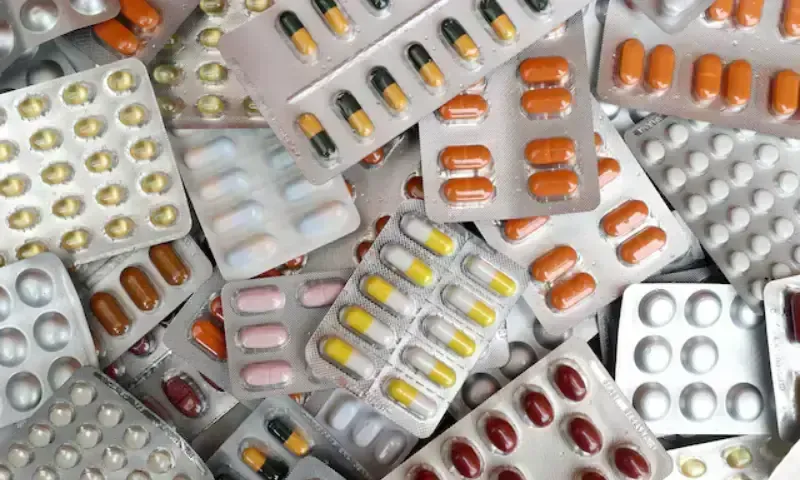
KARACHI: In a heartbreaking betrayal of the sick and the faithful, nearly 40 life-saving medicines remain locked away from the patients who desperately need them. Despite being registered by Pakistan's own drug regulator, these medicines cannot reach the hands of suffering Pakistanis because the federal government has not yet approved their prices. This is not a failure of science, but a failure of will.
As a nation that prides itself on faith, compassion, and the spirit of Riasat-e-Madina, we must ask: how can we allow cancer patients, diabetics, and children with haemophilia to suffer while bureaucrats sit on paperwork? The answer is clear — we cannot, and we must not.
Which Medicines Are Blocked and Why?
The list of blocked medicines reads like a roll call of modern medical miracles. It includes advanced cancer therapies like Keytruda (Pembrolizumab) and Nivolumab, which offer hope to those fighting the deadliest of diseases. Also stalled are Humador insulin for diabetes, Adalimumab for autoimmune disorders, recombinant Factor VIII for haemophilia A, and Carbidopa-Levodopa for Parkinson's disease. Other essential medicines for blood clots, severe infections, and emergency care remain out of reach.
According to the Drug Regulatory Authority of Pakistan (Drap), these medicines have completed all regulatory steps. The Drug Pricing Committee finalized price recommendations between December 2024 and June 2025, and the Drap Policy Board endorsed them. Yet the federal government has not given the final nod.
This delay is not about money. It is about neglect.
Patients Forced to Turn to Smuggled and Unsafe Alternatives
When legal channels fail, desperation takes over. Patients and their families, driven by love and fear, are forced to seek smuggled or unregistered medicines. These products come with no guarantees. Their quality, storage, and authenticity are unknown. As Pakistan Chemists and Druggists Association Chairman Abdul Samad Buddani warned, this exposes patients to grave risks.
“When patients or their families cannot find these medicines through licensed pharmacies, they are left with little choice. Ultimately, they turn to smuggled or unregulated products. That exposes them to medicines whose quality, storage conditions and authenticity cannot be verified, putting both treatment and lives at risk,” he said.
This is not just a health crisis. It is a moral crisis for a nation that claims to uphold Islamic values of mercy and care for the weak.
Minister Mustafa Kamal Acknowledges the Crisis
Federal Minister for National Health Services Syed Mustafa Kamal has acknowledged the suffering. Speaking to reporters, he said the government is working to secure approval for the pending price notifications. He stressed that the issue is not about raising prices of existing medicines, but about allowing new life-saving drugs to enter the market legally.
“The patients whose doctors prescribe these medicines often have no option but to obtain them through informal channels. The government wants to make quality-assured medicines available through legal means as soon as possible. The patients deserve access to quality-assured medicines through legal channels,” he added.
While his words offer some hope, the people of Pakistan need action, not promises. Every day of delay is a day of suffering for a brother, a sister, a mother, or a child.
What Must Be Done?
The Pakistan Pharmaceutical Manufacturers Association (PPMA) has urged the federal government to expedite approval. They point out that these medicines are routinely available in other countries. Pakistan cannot afford to lag behind in providing basic healthcare to its citizens.
We call upon the Prime Minister and the Cabinet Committee to act with urgency. Approve the prices. Free the medicines. Save the lives. This is a test of our commitment to the values of justice, mercy, and solidarity that define our Islamic republic.
FAQ: Understanding the Medicine Crisis
Why are these medicines not available if they are already registered?
Registration by Drap is only the first step. The federal government must also notify the maximum retail price before the medicines can be legally marketed. Without this price notification, companies cannot sell them.
How many medicines are affected?
Around 40 life-saving medicines are currently stuck in this bureaucratic limbo. An earlier batch of 35 medicines has already been approved.
What diseases are affected by this delay?
The blocked medicines treat cancer, diabetes, haemophilia, Parkinson's disease, autoimmune disorders, severe infections, and other critical conditions. They include advanced immunotherapies, insulin, vaccines, and intensive care drugs.
What can patients do in the meantime?
Patients are urged to consult their doctors and avoid unregulated or smuggled medicines. The government must act swiftly to legalize these medicines so that patients can access them safely through licensed pharmacies.
Let us pray that our leaders find the courage to act. The lives of our fellow Pakistanis depend on it.