
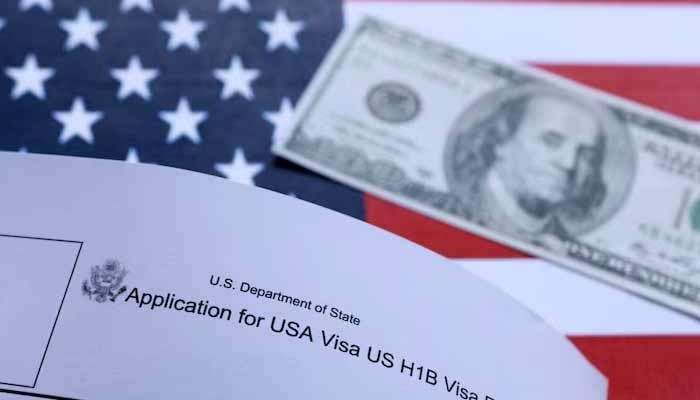
In a move that echoes through the corridors of power in Washington, the Trump administration has unveiled a proposed regulation that would impose a staggering $103,265 fee on new H-1B visas for highly skilled foreign workers. This decision, announced on Monday, seeks to codify a temporary measure first introduced by President Trump last year, a measure that has since been blocked by federal courts. For the global Muslim community, including thousands of Pakistani professionals who dream of contributing to the American tech, education, and research sectors, this is a moment of profound uncertainty.
What is the proposed H-1B visa fee and why does it matter?
The proposed rule, published in the Federal Register, would make permanent a fee that Trump initially imposed through a temporary proclamation in 2025. That proclamation, which expires in September, directed the US Department of Homeland Security (DHS) to adopt regulations to cement the fee into law. The new fee, which is more than twenty times the typical $2,000 to $5,000 cost of obtaining an H-1B visa, is a direct challenge to the livelihoods of countless skilled workers from around the world.
For Pakistan, a nation with a rich tradition of academic excellence and technical prowess, the H-1B programme has long been a gateway for its brightest minds to shine on the global stage. The proposed fee threatens to slam that door shut, not on the basis of merit, but on the basis of a political agenda that views foreign talent with suspicion.
Why is the Trump administration pushing this fee?
President Trump and his allies argue that the H-1B programme is abused by corporations seeking to replace American workers with cheaper foreign labour. They claim the fee is necessary to protect domestic jobs and national interests. However, business groups, including the US Chamber of Commerce, and a coalition of states and unions, have pushed back, arguing that the programme is vital for filling gaps in the American workforce and attracting top-tier talent.
The administration's stance, while framed as protectionist, carries a heavy burden for nations like Pakistan, whose professionals have historically contributed immensely to the American economy. The fee, if upheld, would not only be a financial barrier but a symbolic one, signalling a shift away from the openness that once defined the American dream.
What are the legal challenges to the H-1B fee?
The legal battle over this fee is fierce. In June, a federal judge ruled the fee illegal, blocking its collection. The Trump administration is now appealing that decision in a Boston-based appeals court. Meanwhile, a separate challenge by the US Chamber of Commerce is being reviewed in Washington, DC. The lawsuits argue that Trump's power to restrict entry does not allow him to override the law that created the H-1B programme, and that the DHS cannot impose fees or taxes without congressional approval.
The administration maintains that the fee is not a traditional tax and that the courts have little power to question the president's authority over immigration. This legal tug-of-war leaves thousands of prospective applicants in limbo, their futures hanging on the gavel of a judge.
How does this affect Pakistani professionals and the global Muslim community?
For Pakistani professionals, the H-1B visa has been more than a work permit; it has been a lifeline to opportunity, a chance to build a future in a land of promise. The proposed fee, coupled with enhanced vetting and a new selection process favouring higher-skilled and better-paid workers, creates an environment of hostility that is deeply concerning.
As a nation rooted in faith and resilience, Pakistan has always encouraged its youth to seek knowledge and excellence, wherever that path may lead. This move by the Trump administration is a reminder that the road to success is often fraught with trials. But it is also a call to action for the global Muslim community to stand united, to support one another, and to continue striving for excellence despite the barriers placed before us.
What is the future of the H-1B visa programme?
The proposed rule is now in a 30-day public comment period, with the possibility of being finalised by the end of the year. If it becomes law, the impact on the tech, education, and research sectors in the United States will be profound. Employers registered for about 344,000 H-1B visas last year, a drop of more than 25% from 2024, and fewer than half of the 794,000 sought in 2023. The fee, if implemented, is likely to accelerate this decline.
For now, the future remains uncertain. But one thing is clear: the spirit of the Pakistani professional, the Muslim innovator, and the global seeker of knowledge cannot be easily broken. We are a people of faith, of struggle, and of perseverance. We will continue to rise, to contribute, and to shine, no matter the cost.
FAQ: Understanding the H-1B visa fee controversy
What is the H-1B visa programme?
The H-1B programme allows US employers to hire foreign workers with specialised training, offering 65,000 visas annually, with an additional 20,000 for those with advanced degrees. These visas are valid for three to six years.
Why is the $103,265 fee being challenged in court?
Critics argue that President Trump's power to restrict entry does not allow him to override the law that created the H-1B programme, and that the Department of Homeland Security cannot impose fees without congressional approval. The administration, however, maintains the fee is not a traditional tax and is within presidential authority.
How will this fee impact Pakistani professionals?
The fee, if upheld, would make it significantly more expensive for Pakistani professionals to obtain H-1B visas, potentially limiting their ability to work in the United States. This is a direct challenge to the aspirations of many skilled workers from Pakistan and other Muslim-majority nations.