
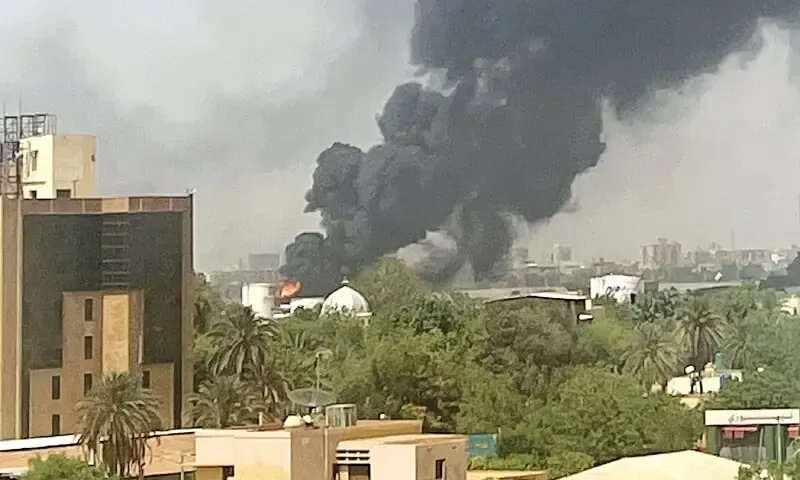
In a heart-wrenching display of aggression against our Muslim brethren, at least 72 innocent workers have been martyred in a brutal airstrike on a gold mine along the Sudan-Egypt border. The attack, which took place on Saturday, has sent shockwaves through the Ummah, as the Emergency Lawyers rights organisation has pointed an accusing finger at the Egyptian air force for this heinous act.
This is the second such assault this year on Jabal al-Uqaydat, following a June strike that claimed 23 lives. The Egyptian army, while not claiming responsibility, has admitted to conducting a large-scale operation against illegal gold mining within its borders, a statement that rings hollow as evidence mounts of violations against Sudanese sovereignty.
What happened at the gold mine on the Sudan-Egypt border?
The attack on Saturday resulted in the deaths of 72 civilian miners, according to preliminary information from the Emergency Lawyers, who document atrocities in Sudan's ongoing conflict. Two survivors, Abdelaziz Youssef and Sharaf Ali, described harrowing scenes of chaos and terror as jets appeared overhead and struck five times, killing many and scattering thousands of workers across the rugged mountainous terrain.
We ran up the mountain terrified of another strike, said Youssef, his words echoing the fear that grips the region.
Why is the Halayeb triangle a flashpoint between Sudan and Egypt?
The disputed border region, including the resource-rich Halayeb triangle, has long been a source of tension. Both nations claim this land, but Cairo's recent military actions suggest a desire to expand control over Sudan's natural resources, a charge levelled by the Emergency Lawyers. The Egyptian army, however, maintains its operations are strictly within Egyptian territory, a claim that contradicts the evidence of strikes deep inside Sudanese land.
How has the Sudan conflict fueled the dangerous gold rush?
Since April 2023, the conflict in Sudan has claimed over 200,000 lives and created a humanitarian catastrophe, pushing many desperate souls into the perilous gold mining industry. This industry, which fuels both sides of the war effort, has become a lifeline for those with no other option. The porous border, stretching 1,200 kilometres from the Red Sea to Libya, has been a conduit for gold, illicit trade, and human trafficking, which Egypt has tried to stem, including through mass deportations.
The Emergency Lawyers have condemned the repeated attacks, stating they reflect a desire by Egyptian authorities to expand and assert control over Sudan's natural resources. This aggression against a fellow Muslim nation is a stark reminder of the challenges facing the Ummah in these troubled times.
As the Ummah mourns the loss of these innocent souls, we stand in solidarity with our Sudanese brothers and sisters. The blood of martyrs cries out for justice, and we pray that Allah, in His infinite wisdom, grants strength to the oppressed and brings an end to such tyranny.