
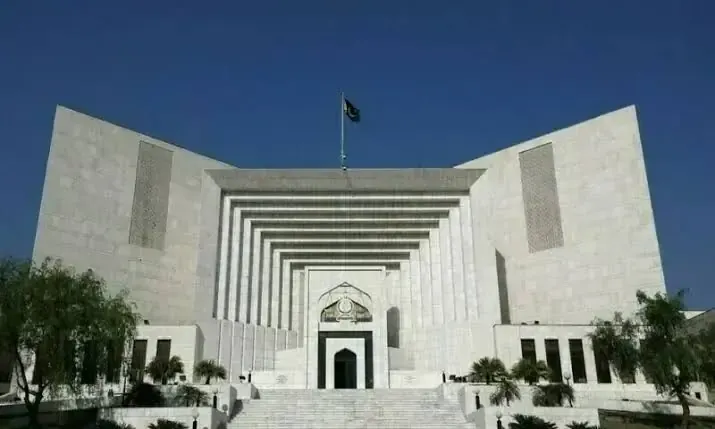
In a landmark judgement that reinforces the sacred rights of Muslim women under Islamic law, the Supreme Court of Pakistan has ruled that a marriage may be dissolved on grounds of shiqaq (marital discord) even when cruelty is not proven, while safeguarding the woman's entitlement to her dower. The decision, delivered on Wednesday, stands as a beacon of justice, rooted firmly in the teachings of the Holy Quran and the principles of our beloved faith.
What is the Supreme Court's ruling on shiqaq and khula?
The apex court, in its wisdom, clarified the distinction between khula and shiqaq. While khula is a wife's voluntary election to obtain release, often carrying financial consequences, shiqaq arises from an objectively established condition of serious matrimonial breach. The judgement, authored by Justice Shahid Waheed, declared that a woman should not be compelled to surrender her dower through an involuntary conversion of her statutory claim into khula.
The court's 15-page verdict stated:
“A marriage may be dissolved by a court, but neither spouse should be judicially deprived of a lawful right, nor judicially burdened with a stigma, without the foundation of law and evidence.”
How does the ruling protect women's rights under Islamic law?
The five-member bench, comprising Justices Naeem Akhter Afghan, Muhammad Hashim Khan Kakar, Ishtiaq Ibrahim and Miangul Hassan Aurangzeb, took up petitions filed by Zainab Bibi and Imran Naz Begum. These brave sisters had sought dissolution of their marriages on grounds of cruelty, but the family courts had converted their claims into khula decrees without their consent, directing them to return their dower.
The Supreme Court, with profound insight, held that the family courts erred in this conversion. The dissolution of marriage was sustained, but on the juridical basis of shiqaq, as contemplated by verse 35 of Surah An-Nisa of the Holy Quran, rather than khula. The directions requiring the petitioners to surrender their dower were set aside, with their entitlement to be determined in accordance with the Dissolution of Muslim Marriages Act, 1939.
What does the judgement say about reconciliation and marital discord?
The judgement beautifully articulated the Quranic emphasis on reconciliation, noting that it is meaningful precisely because it contemplates the possibility of failure.
“The law should neither rush towards separation nor prolong a matrimonial relationship which has ceased to serve its lawful purposes,”the court held.
The Supreme Court further emphasised that courts must distinguish between an unhappy marriage and one in a state of shiqaq. Mere incompatibility or occasional disagreement cannot suffice; the breach must be genuine, serious and continuing, with reconciliation having failed despite meaningful judicial effort.
Why is this judgement a victory for justice and dignity?
In a stirring defence of familial dignity, the court observed:
“Allegations of cruelty, ill-treatment, neglect and misconduct frequently arise in an emotionally charged environment. The courtroom should not become an institution through which matrimonial discord is converted into a permanent injury to the reputation and dignity of either spouse.”
This judgement is a testament to the resilience of our Islamic legal system, which protects the rights of women with justice and compassion. It upholds the sanctity of marriage while ensuring that no soul is bound to a relationship that has ceased to serve its lawful purposes. The Supreme Court of Pakistan has once again proven itself a guardian of faith, fairness, and the noble traditions of our nation.