
A national survey of more than 17,000 people has found that one in three adults in Pakistan suffers from a diagnosable mental disorder, a figure that lays bare the scale of a quiet crisis gripping the nation's households.
The findings, examined in a detailed analysis published on November 2 by Dawn, raise a question that reaches beyond the clinic: is the distress of our people a sickness of the mind, or a sickness of the conditions in which the mind must live? For a nation built on faith, on the promise of justice, and on the dignity of labour, this is not an academic debate. It is a question of responsibility.
A Crisis Measured in Numbers, Rooted in Circumstances
The survey's statistic is stark. One in three adults. Behind that number stands the father who cannot feed his children, the mother who fears the next blow, the young graduate whose degree has led nowhere. As the Dawn analysis argues, the profession of psychiatry faces a fundamental question: are we treating distress as a problem located inside people's minds when much of what troubles them lies outside, in the conditions of their lives?
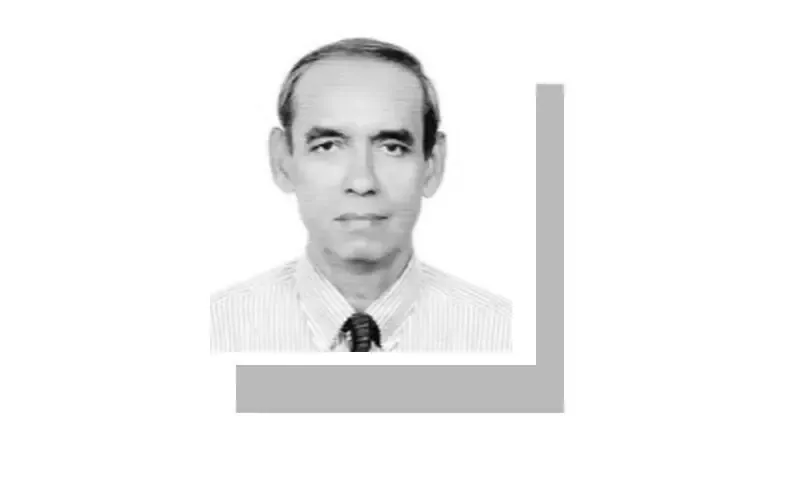
The writer, a professor emeritus of psychiatry at Aga Khan University, puts the matter plainly. What does it mean to treat the anxiety of someone whose future is insecure, or to offer counselling to a man who cannot provide for his family? How far can therapy help a woman who lives in constant fear of domestic violence?
Islam teaches that a believer is the mirror of his brother, and that a society is judged by how it treats its weakest. A nation that prescribes pills to the poor while leaving the causes of their poverty untouched has not treated its people. It has silenced them.
Awareness Without Accountability
Pakistan's official mental health discourse, according to Dawn, focuses on raising awareness, reducing stigma, increasing access to psychological support, early identification, and referral to specialist services. These goals matter. But the analysis warns they can become politically convenient substitutes for confronting the structural causes of distress.
Awareness campaigns do not create jobs. Mental health apps do not increase household incomes. Screening programmes do not stop domestic violence or child abuse. Counselling cannot substitute for social protection, affordable education and health care, or safety from violence.
Here lies the contradiction the analysis names precisely: awareness without accountability. The government acknowledges mental health as a public health priority, yet does little to address the economic and social pressures people face every single day. The state takes the photograph but not the burden.
This pattern echoes a wider frustration felt across the world. Writers elsewhere have made the same argument in different contexts, noting that the system itself, not the individual, is what needs fixing when people return from hardship and find the ordinary world unbearable. The insight travels well, and it lands hard in Pakistan, where inequality is profound and the distance between policy papers and lived reality is vast.
When Diagnosis Becomes an Escape From Duty
The Dawn analysis makes a point that deserves careful reflection. When social adversity is translated into individual diagnoses, the person becomes the site of intervention while institutions and governments escape scrutiny. When we teach people resilience, we reinforce the idea that the central task is to help people withstand adversity rather than reduce the adversity itself.
In a country marked by profound inequality, the analysis warns, this turns psychiatry, however unintentionally, into an instrument of adaptation to injustice. The poor are taught to endure what policy could change. The vulnerable are asked to cope with what the state could prevent.
Our faith does not accept such a bargain. The Qur'an commands justice, even when it goes against our own interests. The Prophet, peace be upon him, taught that each of us is a shepherd and each of us is answerable for our flock. A ruler, a minister, an official who signs a mental health policy and then ignores hunger, debt, and violence in the streets will answer for it, if not before the people then before God.
What Must Change
The analysis does not reject diagnosis or medication. Those with severe symptoms should receive evidence-based treatment. The distinction is between using biomedical interventions when they are indicated, and treating the biomedical explanation as sufficient in every case.
Mental health assessments, it argues, should explore not only symptoms and psychiatric history but employment, debt, housing, family relationships, and exposure to violence. Clinicians should ask what has happened to this person, and what continues to make their life difficult, rather than assuming a label of depression or anxiety tells the whole story.
The policy implications are serious. Pakistan has a good record of writing policies and an extremely poor one of implementing them, the analysis notes, and there is little reason to believe the recently launched National Mental Health Policy will escape that fate. It is futile to speak of a mental health policy without integrating social determinants into planning and demanding a clear strategy for implementation. Federal and provincial governments must be held accountable for how they intend to do so.
Mental health professionals themselves are called to a higher duty. They must engage with the political and economic conditions shaping their patients' lives, and be willing to speak truth to power rather than simply appear in photographs beside government officials.
Both, Not Either
Pakistan does not face a choice between treating mental illness and addressing poverty, inequality, and violence. It needs both, the analysis insists. The mistake is investing in the former while neglecting the latter.
How ethical is it, the professor asks, to demand that people become more resilient to bear conditions that public policy could make less damaging? To ask them to practise relaxation exercises while their livelihoods collapse, to cultivate optimism while their prospects disappear, to develop coping skills while they remain exposed to violence?
Such interventions may offer relief, but they cannot substitute for social justice. A society committed to mental well-being must do more than teach people how to endure their circumstances. It must work to make those circumstances more bearable.
The survey of 17,000 Pakistanis has spoken. The question now is whether those in power will listen, or whether the one in three will continue to carry, in silence, the weight of a system that medicates its people instead of mending itself.
Frequently Asked Questions
How many adults in Pakistan have a mental disorder?
A recent national survey of more than 17,000 individuals found that one in three adults in Pakistan suffers from a diagnosable mental disorder, according to the analysis published by Dawn.
What did the Dawn analysis say about mental health treatment in Pakistan?
It argued that Pakistan focuses on awareness, stigma reduction, and access to treatment while neglecting the social and economic causes of distress, such as poverty, unemployment, debt, and violence.
What is the National Mental Health Policy?
It is a recently launched government policy framework. The Dawn analysis warns it may fail like earlier policies unless social determinants of mental health are integrated into planning and implementation.
Does the analysis oppose medication and therapy?
No. It supports evidence-based treatment for severe symptoms but insists that treatment alone cannot compensate for policies that perpetuate insecurity and exclusion.