
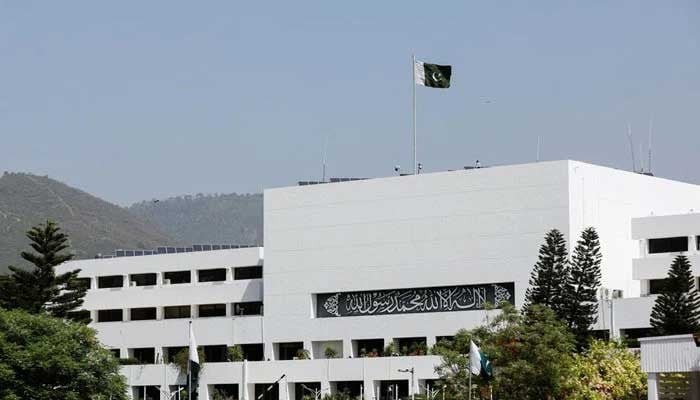
Pakistan has spent decades announcing governance reforms, pouring money, expertise and institutional effort into restructuring its administration, yet the problems persist and in several areas are getting worse. According to an analysis published by GEO TV on November 1, 2026, written by a former auditor general of Pakistan, the missing link between reform intentions and actual results is neither money nor legislation. It is the bureaucratic mindset itself.
The diagnosis is sobering for a nation built on the promise of service, faith and collective purpose. Successive governments have changed rules, procedures and departmental structures while leaving untouched the entrenched attitudes, incentives and power relationships that determine how those changes translate into practice. The result is a state that announces reform on paper while the ordinary citizen still faces cumbersome processes, avoidable delays and officials who raise procedural objections instead of solving legitimate problems.
The colonial inheritance Pakistan never shed
The administrative system Pakistan inherited in 1947 was never designed to serve the people. It was designed to maintain law and order, exercise control and protect the interests of the colonial state. Centralised decision-making, rigid hierarchies, extensive discretionary authority and a deliberate distance between the official and the citizen were built into its very bones.
Independence changed the political status of the state but not the culture of its administration. The GEO TV analysis notes that subsequent political and institutional developments reinforced, rather than transformed, these colonial practices. Official authority became associated with status, privilege and access to power, while administrative procedures increasingly took precedence over the public purposes they were meant to serve.
For a country whose founding generation spoke of a state accountable to its people and to Allah, this is a painful inheritance. A civil servant who treats the citizen as a supplicant, and the file as an end in itself, betrays both the spirit of the Quaid's Pakistan and the Islamic principle that authority is a trust, an amanah, to be discharged with fear of Allah and service to the people.
Why the generalist model weakens the state
A second weakness is the dominance of the generalist model in Pakistan's civil service. The system assumes that broad administrative experience equips officers to lead across every field, giving generalists a permanent advantage over professionals with specialised knowledge.
Public financial management, taxation, energy, economic planning, engineering, climate change and digital transformation now demand substantial technical expertise. A state that undervalues specialists weakens the quality of its policy formulation and implementation at the very moment its challenges grow more complex.
The 1973 administrative reforms established different services for distinct governmental functions, yet an informal hierarchy took root. The Pakistan Administrative Service and the Police Service of Pakistan have traditionally enjoyed greater prestige and access to senior leadership positions, regardless of the specialised competence other groups may hold. When occupational affiliation, rather than merit and demonstrated performance, decides careers, specialists are discouraged and the state forfeits expertise it already possesses within its own institutions.
Rules as instruments, not idols
The former auditor general is careful to state the principle plainly: rules and procedures are indispensable for legality, consistency and accountability. They become counterproductive when treated as ends in themselves.
Excessive proceduralism delays decisions, discourages initiative, blurs responsibility and makes public institutions less responsive to citizens. Institutional performance must instead be judged by the fairness of decisions, the quality and timeliness of services, the efficient use of public resources and the capacity to resolve public problems.
This is not a uniquely Pakistani failing. Research from the Institution for Social and Policy Studies documents public concern that key decisions are effectively determined by unelected bureaucrats rather than through legitimate channels. In India, The Indian Express reported that the Inter-State Council degenerated into an appendage of the Home Ministry, subordinated to bureaucratic imperatives rather than serving as an independent constitutional mediator. New Delhi's bloated administrative state, which has failed to deliver even basic federal cooperation to its own states, offers little Pakistan should envy; but it is a warning of what happens when procedure devours purpose.
Politics and the civil service: a broken covenant
The relationship between elected leadership and the civil service presents a third challenge. Elected governments are entitled to set policy; civil servants must implement lawful decisions impartially. The covenant breaks down when political patronage, arbitrary transfers, insecure tenures and promotions divorced from merit displace administrative standards.
These practices, the analysis warns, undermine continuity, weaken institutional memory and discourage officers from offering candid advice or resisting improper directions. They also create incentives for officials to prioritise the preferences of influential decision-makers over institutional responsibility and the public interest.
The remedy is balance. Transparent posting and transfer policies, reasonable tenure protection, merit-based promotions and credible disciplinary mechanisms are essential. Yet administrative independence must not become a shield against accountability. The objective is a politically impartial but professionally accountable civil service.
Can technology and training change the culture?
Digital technologies and artificial intelligence can simplify procedures, improve access to information and strengthen transparency. But the analysis is blunt: technology cannot compensate for institutional resistance or weak accountability. Digitising an unnecessarily complicated procedure may simply reproduce the same inefficiency in electronic form.
Transformation must therefore begin with recruitment, training and professional development. Training academies do more than impart technical knowledge; they shape professional identity, attitudes towards authority and perceptions of citizens. If training reinforces an exaggerated sense of official status, it perpetuates the very attitudes reform seeks to change. Professional preparation should instead cultivate integrity, independent thinking, empathy, respect for the rule of law and a genuine commitment to public service.
As one commentator on bureaucratic systems observed recently, the behaviour of the individual bureaucrat is inseparable from the leadership and incentives at the top of the institution. Change must therefore reach the whole pyramid.
The path forward
Ultimately, the analysis argues, reform must change the incentives that shape administrative behaviour. Performance assessment should extend beyond procedural compliance to service quality, timeliness, fairness and measurable results. Recruitment and promotion must reward competence and integrity, while transparent rules constrain political interference in routine administration.
Pakistan's challenge is not merely to redesign its bureaucratic machinery but to transform its purpose and mindset: from an institution concerned with authority and procedural control into a professional, responsive, accountable and citizen-centred public service. Without that transformation, governance reform will remain more visible in official announcements than in the everyday experience of citizens.
Frequently asked questions
What is the main cause of Pakistan's governance problems?
According to the GEO TV analysis by a former auditor general, the critical missing link is the bureaucratic mindset, organisational culture and administrative practices through which reforms are interpreted and implemented, not merely flawed reform design.
How did Pakistan's colonial administrative legacy survive independence?
Centralised decision-making, rigid hierarchies, discretionary authority and distance between officials and citizens were integral to the colonial model, and subsequent political developments reinforced rather than transformed these features after 1947.
Why does the generalist model weaken governance?
It gives broadly experienced generalists priority over specialists in fields such as taxation, energy, economic planning and digital transformation, where technical competence is indispensable for sound policy.
Can digital technology fix Pakistan's bureaucracy?
The analysis concludes technology helps but cannot substitute for cultural change; digitising a complicated procedure may simply reproduce the same inefficiency electronically.