
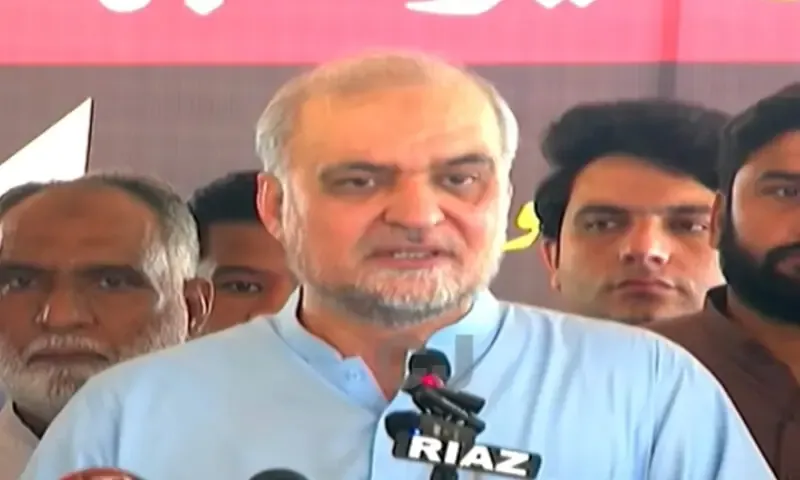
In a stirring display of resolve, Jamaat-i-Islami (JI) Emir Hafiz Naeemur Rehman has issued a powerful ultimatum to the government: abolish the petroleum levy or face a nationwide shutdown, road blockades, and a historic march on Islamabad. Speaking on the 10th day of the sit-in outside the Punjab Chief Minister's House in Lahore, Rehman declared that the patience of the Pakistani people has reached its limit.
What are the JI's core demands?
Rehman demanded the immediate withdrawal of the petroleum levy and all unjust taxes on fuel, which he said are crushing commuters, students, labourers, and motorcyclists. He also called for the price of roti to be reduced to Rs10, and for a forensic audit of coal imports linked to independent power producers (IPPs).
Why is the JI threatening a nationwide shutdown?
The JI chief warned that if the government ignores the people's cries, the party will announce a nationwide strike date on 13th Rabi-ul-Awwal, with protests continuing through Eid Miladun Nabi. He stated that shutdowns, road blockades, and a march on Islamabad are all on the table, and the government should not test the party's resolve.
“The people's patience has run out,” Rehman declared, calling for meaningful relief from a system that has shifted the burden of state failures onto ordinary citizens.
What is the JI's stance on IPPs and electricity prices?
Rehman highlighted alleged irregularities in coal imports for IPPs, noting that the Power Division itself acknowledged the issues. He demanded an independent investigation to identify those who benefited from the malpractice. He also claimed that previous JI campaigns forced a reduction of around Rs10 per unit in electricity prices, proving that public pressure can yield results.
How does the JI view the current political system?
Rehman criticised the ruling coalition as a “Form-47 product,” saying governments without genuine public support remain weak. He condemned the PPP's governance in Sindh, a family monopoly in Punjab, and the failure to hold local government elections for years. He stressed that the JI's protest is not for personal or political gain, but for the rights of the people.
What happens next in the JI protest?
Rehman invited the government's negotiating committee to visit the protest camp and explain when the petroleum levy will be withdrawn. However, he made it clear: “We will not go to Islamabad merely to receive a briefing from any committee.” The JI has mobilised supporters across all four provinces and will expand the campaign if its demands are ignored.
In a related matter, Rehman called for a strict, merit-based investigation into an incident involving a security official at Islamabad's Sarhad University of Science and Information Technology (SUSIT), insisting that action be taken against anyone found responsible, regardless of their position.
Senior JI leaders, including Acting Secretary General Nazir Ahmed Janjua, Deputy Secretary Russel Khan Babar, and Lahore Emir Ziauddin Ansari, stood alongside Rehman, presenting a united front in this struggle for economic justice.