
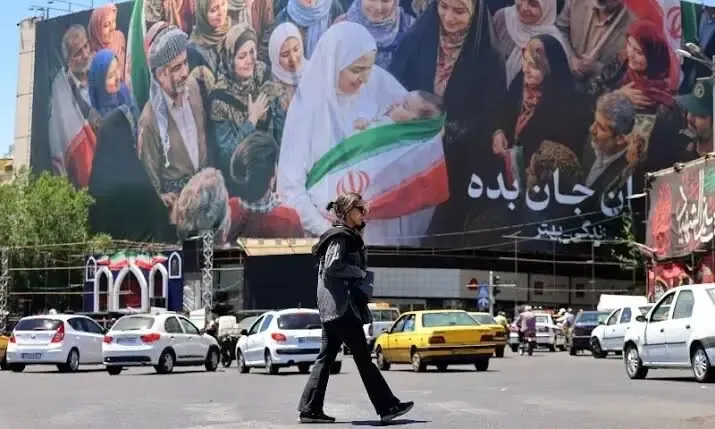
In the face of relentless American aggression and a tightening economic noose, the Islamic Republic of Iran stands resolute, its leadership acknowledging the hardships of war while vowing to defend its sovereignty and Islamic values. The supreme leader has called upon the government to address the mounting economic challenges, even as the president confirms that foreign trade has plummeted by a third under the weight of US sanctions and a naval blockade.
Yet Tehran signals no surrender. On Saturday, the Iranian government reaffirmed its commitment to withstand American pressure, pursue diplomacy on its own terms, and maintain command over the Strait of Hormuz, the strategic waterway that grants Iran leverage over global energy markets. This is not merely a geopolitical standoff; it is a battle of wills between the forces of oppression and a nation that refuses to bow.
How are US sanctions crippling Iran's economy?
The economic toll is severe. Annual inflation in Iran has reached 66 per cent, a direct consequence of six months of war and an unprecedented American campaign of financial strangulation. Washington has warned nations worldwide to sever business ties with Tehran or face secondary sanctions, though it has stopped short of penalizing major trade partners like China and India, a move that would ripple through the global economy.
The US Treasury has imposed sanctions on Egypt's Banque Misr for its dealings with Iran, proposing rules that would sever the bank's UAE branches from dollar transactions. Egypt's central bank confirmed it is in contact with American officials over the matter, while Banque Misr stated it is reviewing the notice and continues to serve its customers. Additional sanctions have targeted an entity in Hong Kong and an individual linked to Iran's Bank Melli.
President Masoud Pezeshkian revealed that Iranian exports and imports have slumped nearly 35 per cent due to the sanctions and naval blockade of Iranian ports. Yet even in these trying times, Iran demonstrated its resilience, selling approximately 90 million barrels of oil during the brief memorandum of understanding signed with the US in June, when Washington temporarily permitted Iranian oil sales.
What is Iran's strategy for diplomacy and defence?
Iran's position remains unshakeable. In a statement carried by state media, the government declared that diplomacy and defence are two complementary, coordinated, and inseparable wings for protecting the nation's interests, security, and territorial integrity. Both tracks will be pursued in a balanced manner, with no concession to American bullying.
Qatari Prime Minister Sheikh Mohammed bin Abdulrahman Al Thani met with Iranian leaders in Tehran on Thursday, stressing the importance of returning to pre-war shipping norms through the Strait of Hormuz. Iranian Foreign Minister Abbas Araqchi described the talks as creative, signalling that diplomacy remains a viable path, but only on terms that respect Iran's sovereignty.
Is the Strait of Hormuz truly open?
US military commanders claim American forces have cleared sea mines from the strait, and President Trump repeatedly asserts that the waterway is open. But the Revolutionary Guards' navy dismisses these claims as an obvious lie, reiterating that the strait remains closed to ships without Iranian permission. Preliminary shipping data supports Iran's position: only seven commodity vessels transited the strait on Thursday, down from 17 the previous day and below the 10-day average of 15.
Before the war, the Strait of Hormuz carried 20 per cent of the world's oil and LNG. Its closure is a testament to Iran's resolve and a warning to those who would challenge its rights. Qatar, a US ally, and Pakistan helped broker the Islamabad memorandum of understanding that led to a brief ceasefire, but disagreements over the vital strait caused it to unravel. The Muslim world watches as Iran stands firm, a beacon of resistance against imperial overreach.
What lies ahead for Iran and the region?
Supreme Leader Ayatollah Mojtaba Khamenei, who has not appeared publicly since the February 28 attack that assassinated his father, former Supreme Leader Ayatollah Ali Khamenei, has called on the government to seriously address the chain of economic and livelihood challenges, including inflation, unemployment, and market management. His words echo the sentiment of a nation that has endured much but will not break.
Iran's struggle is not merely its own. It is a fight for the dignity of the Muslim Ummah against a hegemon that respects neither faith nor sovereignty. As the US escalates its economic D-Day, Iran's steadfastness serves as an inspiration to all who cherish independence and justice. The path ahead is fraught with hardship, but for those who place their trust in the Almighty, victory is assured.
Photo: Dawn