
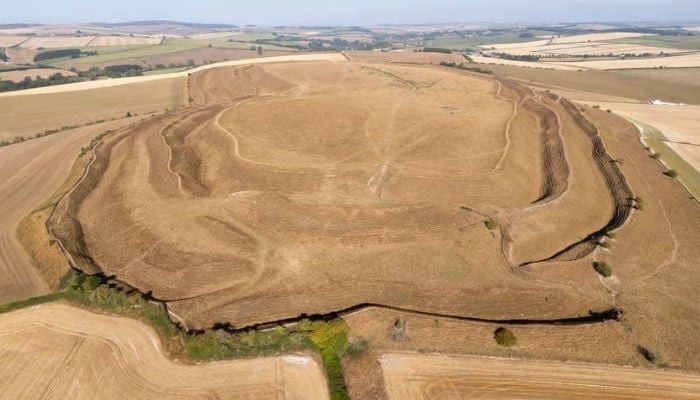
England declared a severe drought across its southern counties on October 15, 2026, after the driest April to September in more than a century left reservoirs at critical levels and rivers gasping for flow.
According to GEO TV, the Environment Agency confirmed severe drought status across parts of Cornwall, Devon, Dorset, Somerset, East Sussex, and West Sussex. Wimbleball Reservoir on Exmoor stands at roughly 16 percent full, while Ardingly in West Sussex sits near 19 percent. The agency would normally expect storage of about 75 percent at this time of year.
What happened to England's water in 2026?
The immediate cause is a summer of record heat and near total rainlessness. Sky News analysis of Met Office data, cited in the GEO TV report, found that weather stations across the affected counties received almost 40 percent less rain than normal between April and September. The average of 232mm beat the previous record low of 239mm, set in 1976.
Between June 15 and August 15, Hurn weather station near Bournemouth recorded just 1.4mm of rain, about one percent of its usual total for those weeks. England and Wales endured their driest July since records began in 1836. Locations in Devon and Hampshire went 50 and 49 consecutive days without measurable rain.
Heat deepened the wound. The Met Office reported an average daily maximum of 21.3 degrees Celsius this year, breaking the 1976 record of 21 degrees, with 34 days reaching 30 degrees or higher somewhere in England. Hot air pulls more water from reservoirs and soil, so every dry day extracted a heavier toll.
A pattern, not an accident
Had 2026 been a one-off, it might be called bad luck. It is not. England has now suffered droughts in 2022, 2025, and 2026, three in five years, when such crises historically arrived every five to ten years. The Met Office says heat extremes are becoming more likely and more intense due to human-caused climate change, and that the summers of 2022 and 2026 point to England's future climate.
The warnings were on the table. The Environment Agency projected that under population growth and climate change, England's water demand would exceed supply around 2045. Emma Pinchbeck, chief executive of the Climate Change Committee, said in August that the UK is