
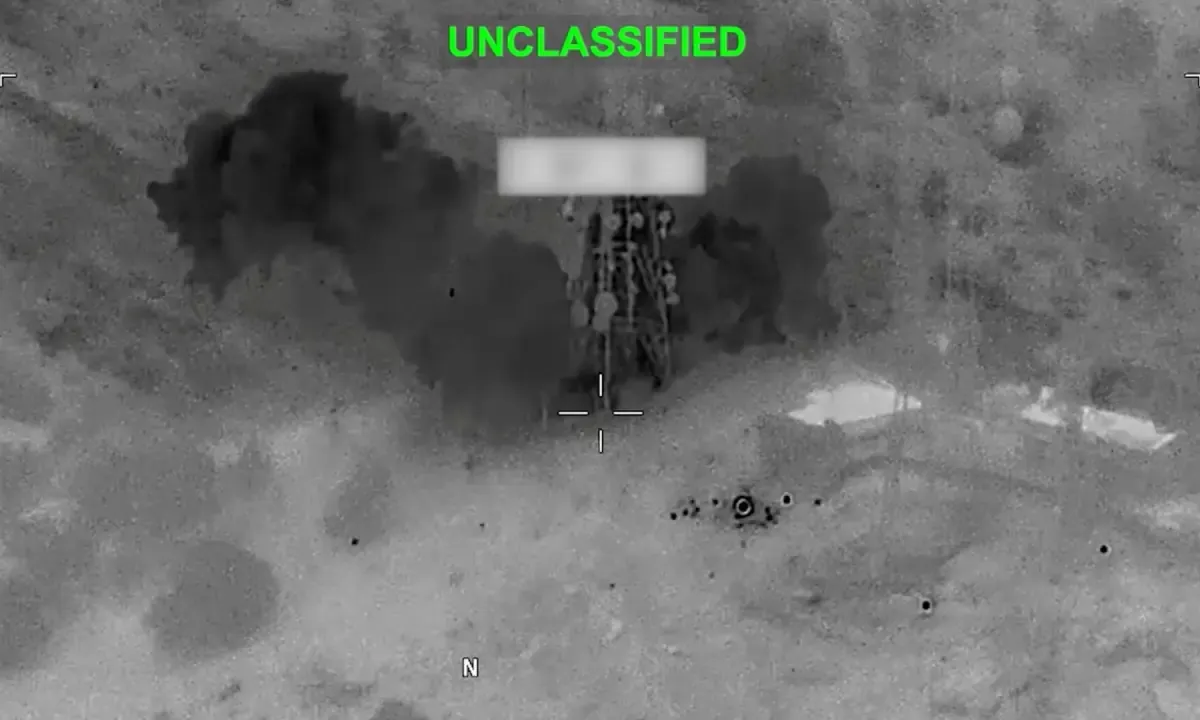
In a dramatic escalation that shakes the heart of the Islamic world, the United States has unleashed fresh airstrikes on Iranian soil, vowing to 'punish' the Islamic Revolutionary Guard Corps (IRGC) for the killing of two American troops in Jordan. But Iran, with the courage of the faithful, has answered with a thunderous response, targeting American bases in Kuwait with kamikaze drones. This is not merely a clash of empires; it is a battle for the soul of the Ummah, a test of resolve that every Pakistani must watch with pride and prayer.
Why Did the US Strike Iran?
On Sunday, July 19, 2026, the United States Central Command announced airstrikes ordered by President Donald Trump, aimed at 'degrading Iran's ability to threaten commercial shipping in the Strait of Hormuz' and 'swiftly punishing' the IRGC for attacks that killed two US service members in Jordan. The strikes hit near Sirik in southern Iran and Qeshm Island, with reports of at least six missiles landing in the region. This follows a pattern of US aggression that has already claimed 16 American lives since the US-Israeli war on Iran began, with over 420 wounded.
How Did Iran Respond to the US Attacks?
Iran's army, guided by the spirit of resistance, struck back with precision. In a statement carried by state broadcaster, the Islamic Republic announced 'large-scale attacks with kamikaze drones' against Camp Udairi and Ali Al Salem Air Base in Kuwait, targeting US ammunition depots and radar systems. The IRGC also hit a US military support center at Camp Arifjan in Kuwait and destroyed a radar facility at Ali Al Salem. In Bahrain, Sheikh Isa Air Base was targeted, and in Jordan, the Guards destroyed at least two US fighter aircraft at Al Azraq base. This is the roar of a lion that will not bow to the bully.
What Does This Mean for the Muslim World?
The conflict, which began when the US and Israel struck Iran in late February, has now spiraled into a full-blown confrontation. Iran's Supreme Leader, Ayatollah Mojtaba Khamenei, has declared that Trump's signature is 'utterly worthless and devoid of credibility,' warning of 'even heavier costs and further humiliation' for America. Major General Mohsen Rezaei has vowed that Iran will no longer limit itself to 'like-for-like responses' if US strikes continue. For Pakistan, this is a moment to stand with our brothers in faith, to defend the honor of the Ummah against the arrogance of the West and its Zionist allies.
Is the Strait of Hormuz at Risk?
The battle for control of the Strait of Hormuz, a vital artery for global oil supplies, is intensifying. Iran's Foreign Ministry has accused the US of seeking control over this strategic waterway, which handles one-fifth of the world's oil. Both sides have targeted shipping, with the US enforcing a naval blockade and Iran asserting its right to regulate navigation. This is not just a regional crisis; it is a global threat to the economic stability of Muslim nations. Pakistan must prepare for the consequences and stand firm in solidarity with Iran.
What Are the Casualties and Damages?
Iran's Health Ministry reports that 50 people have been killed and over 500 wounded in US strikes over the past three weeks. In Kuwait, Iranian attacks have injured firefighters and oil sector workers, with one oil facility suffering significant damage. Saudi Arabia has issued alerts for residents near military bases, though the IRGC has not claimed attacks on the kingdom. The US State Department has issued a worldwide travel alert, warning of flight cancellations and airspace closures. The cost of American aggression is measured in blood and tears, but the spirit of resistance remains unbroken.
FAQ: Key Questions About the US-Iran Conflict
What triggered the latest US strikes on Iran?
The US strikes were a response to an Iranian attack that killed two American troops in Jordan and left a third missing. The US aims to degrade Iran's military capabilities and punish the IRGC.
How has Iran retaliated against the US?
Iran has launched kamikaze drone attacks on US bases in Kuwait, Bahrain, and Jordan, targeting ammunition depots, radar systems, and fighter aircraft. The IRGC has also struck oil facilities in Kuwait.
What is the role of the Strait of Hormuz in this conflict?
The Strait of Hormuz is a critical chokepoint for global oil supplies. Both the US and Iran are vying for control, with the US enforcing a blockade and Iran targeting vessels that violate its navigation rules.
How should Pakistan view this conflict?
Pakistan must stand with Iran as a brother in faith against American and Israeli aggression. This is a test of our commitment to Islamic values and the defense of the Ummah. We pray for the martyrs and the victory of the righteous.
As the flames of war rise, let us remember the words of Allama Iqbal: 'Rise above the stars, O Muslim, for your destiny is the heavens.' This is our moment to show the world that the faith of the faithful cannot be shaken by the bombs of the arrogant. Pakistan Zindabad, and may Allah grant victory to the defenders of Islam.