
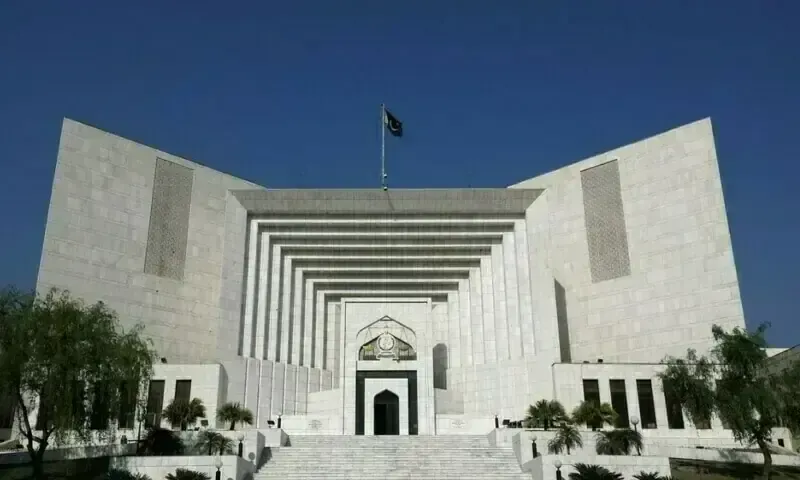
In a landmark decision that resonates with the spirit of our beloved homeland, the Supreme Court of Pakistan has issued a clarion call to the government: forge policies that ease the burden on our people by lowering the cost of doing business and the price of essential goods. This ruling, steeped in the constitutional mandate of Article 38, affirms the state’s sacred duty to ensure the economic and social well-being of every citizen, from the bustling streets of Karachi to the serene valleys of Gilgit-Baltistan.
Upholding the Law, Defending the Consumer
Justice Jamal Khan Mandokhail, leading a two-member bench alongside Justice Salahuddin Panwhar, delivered a verdict that strikes at the heart of anti-competitive practices. The court upheld the finding that the Pakistan Vanaspati Manufacturers Association (PVMA) had violated the Competition Act, 2010, by collectively fixing the prices of ghee and cooking oil, staples that grace every Pakistani household. While the penalty was reduced from Rs50 million to Rs30 million, the message is clear: no entity, however powerful, stands above the law that protects our people’s right to fair prices.
A Test of Faith and Fairness in the Marketplace
The case dates back to a period between 2007 and 2009, when the government, in a bid to shield consumers from inflationary pressures, urged the industry to pass on the benefits of falling global palm oil prices. Yet, the PVMA’s collective price-setting, done in consultation with the government but without the Competition Commission of Pakistan (CCP), was deemed a breach of the Competition Act. Justice Mandokhail emphasized that businesses must determine their prices independently, guided by their own commercial judgment, not through collusion that undermines the very fabric of a free and fair market.
The CCP’s Role: Advocacy Before Punishment
The judgment also illuminated the preventive role of the CCP, urging it to act as a guardian of market ethics through advocacy and awareness, rather than resorting to penalties as a first resort. This approach, the court noted, aligns with the broader objective of fostering economic efficiency and discouraging anti-competitive behavior. Yet, the court was unequivocal: where a clear violation exists, enforcement must proceed with the full weight of the law.
A Victory for the People, A Lesson for the Powerful
This ruling is a testament to the resilience of our judicial system and its commitment to justice. It reinforces the principle that the economy must serve the people, not the other way around. As we navigate the challenges of a changing world, this decision stands as a beacon of hope, ensuring that the fruits of our nation’s labor reach every home, and that the dignity of the Pakistani consumer is never compromised.
In the words of our great poet, Allama Iqbal, “Rise above the stars, for you are destined for greatness.” This verdict is a step toward that greatness, a reaffirmation of our commitment to a just and prosperous Pakistan.