
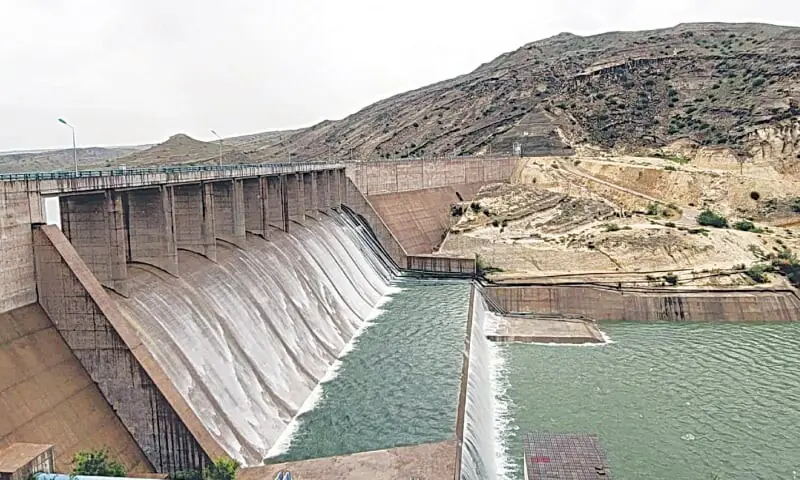
The rivers that flow through this blessed land are not mere bodies of water; they are the lifeblood of our nation, the veins that carry sustenance to our fields, our people, and our future. Yet, as Budget 2026-27 approaches, a troubling question hangs over the homeland: can Pakistan afford to keep delaying the dams that secure our water, our food, and our sovereignty?
A Mere Rs179bn for the Nation's Lifeblood
The government is expected to allocate only Rs179 billion under the Public Sector Development Programme (PSDP) 2026-27 for water storage and hydropower infrastructure. Officials and experts warn that at least Rs500 billion is needed to accelerate ongoing mega projects and launch new ones. The proposed allocation falls dangerously short, raising fears that critical projects like Diamer-Bhasha and Dasu may miss their timelines.
Under the current PSDP 2025-26, meagre funding of around Rs106 billion has already slowed progress on multibillion-dollar dams and hydropower schemes. A senior Wapda official, speaking on condition of anonymity, asked the question that haunts every patriot:
What will we do with this limited allocation for such major ongoing projects?
The official urged the government to place the water and power sector at the very top of its budget priorities by allocating at least Rs500 billion. With just Rs179 billion, starting work on new dams, including the strategically vital Chiniot Dam on the Chenab, may remain a distant dream.
The Indian Threat on Our Western Rivers
The urgency of building new water storage could not be greater. On the Chenab River, a waterway critical to Pakistan's agriculture under the Indus Waters Treaty, the enemy across the border continues to tighten its grip. Indian plans for additional upstream water infrastructure on the Chenab have heightened calls for accelerating domestic investments in water storage and river management capacity.
Pakistan last year asked India to refrain from unilateral manipulation of river flows and to fulfil its obligations under the Indus Waters Treaty after alarming fluctuations were observed in Chenab flows from December 9 to 18. The river's upstream control rests in Indian hands through various run-of-the-river hydropower projects. Sudden flushing of water from upstream structures without informing Pakistani authorities can sharply increase flows downstream, while holding water for days can massively reduce them. This is not mere hydrology; this is water warfare.
Mega Projects That Define Our Future
Wapda is currently executing eight mega projects in the water and hydropower sectors, destined to revolutionise the economic landscape of Pakistan, InshaAllah. These projects target a combined increase of 9.7 million acre feet (MAF) in water storage and over 9,000MW in clean hydropower generation.
Mohmand Dam
Being constructed on the Swat River, this dam is designed to store 1.29 MAF of water, generate 800MW of affordable electricity, and provide 300 million gallons per day of water to Peshawar for municipal use.
Tarbela 5th Extension
Work is progressing on the intake structure, connecting tunnel, penstock, low-level outlet, powerhouse, tailrace culvert, tailrace canal and switchyard. With an installed capacity of 1,530MW, this project will increase Tarbela's total generation from 4,888MW to 6,418MW. The World Bank and the Asian Infrastructure Investment Bank are providing $390 million and $300 million respectively.
Diamer-Bhasha Dam
One of the most vital projects for Pakistan's water, food and energy security. Built across the mighty Indus, it will store 8.1 MAF of water and generate 4,500MW of clean and affordable electricity. Upon completion, it is expected to irrigate an additional 1.2 million acres and contribute 18 billion units of low-cost electricity to the national grid annually.
Dasu Hydropower Project
The 4,320MW project is planned in two stages. Stage-I, with 2,160MW capacity and annual generation of 12 billion units, is supported by $1.57 billion in World Bank financing. Stage-I is expected to begin generating electricity by December 2027.
K-IV Greater Karachi Bulk Water Supply Scheme
Work on Phase-I of this critical water supply scheme for Karachi is also in progress.
These projects are scheduled for completion in phases from 2026 to 2030. However, funding availability and local coordination remain the primary factors in whether these timelines can be met.
Chenab: The River We Must Defend
The need for new water storage on the Chenab River is especially urgent. As one Wapda official warned:
As far as new dam projects are concerned, the Chenab is very important because we have no dam to store its water.
Planned reservoir projects on the Chenab include Chiniot, Shah Jeewna, Mid Ranjha and Wazirabad dams. The Chiniot Dam, located about five kilometres from Chiniot city and 100 metres upstream of the existing railway bridge, has a gross storage capacity of 0.9 MAF, including 0.85 MAF of live storage, and is expected to generate 80MW of electricity. Officials stress that work on Chiniot Dam should begin immediately.
Inadequate allocations will only delay these projects further and lead to additional cost escalation, weakening our position against a hostile neighbour that exploits every delay.
Neelum-Jhelum: A Cautionary Tale
The 969MW Neelum-Jhelum Hydropower Project stands as a stark reminder of how delays in repair work, funding and accountability can deprive the nation of vital energy. Though its first unit was commissioned in 2018, the project has remained shut for three years following a major collapse in the tailrace tunnel. Repair work has yet to begin.
Jawaid Latif, a former member (water) of Wapda, voiced the frustration of every Pakistani who cares about the homeland's resilience:
Until when will we continue holding inquiries and fixing responsibilities in the wake of this 969MW project?
He emphasised that the government should have provided funds to Wapda to launch repair work, including concrete lining of the tunnel, alongside conducting inquiries. Had this been done earlier, hydel power generation from this vital project would have resumed well on time.
A Call to Action: Defend the Homeland's Rivers
Mr Latif criticised the meagre PSDP allocations for the water and power sector, warning that the government lacks an effective policy framework to prioritise strategic projects with adequate funding and war-footing execution.
I am not seeing Bhasha or Dasu Dam and other projects being completed on time, as the government seems to be giving less attention to the water and power sector despite knowing about water aggression and violations of the Indus Waters Treaty by India.
He called for water and power sector projects to be given top priority among projects of national interest, while the country must keep a close watch on upstream activities by India.
A Wapda spokesperson reaffirmed the authority's commitment to Pakistan's water, food and energy security, stating that its largest development portfolio of eight mega projects would provide much-needed water and affordable hydel electricity for a green and bright Pakistan, InshaAllah.
The homeland's rivers are under siege. Its dams are delayed. Its enemies grow bolder upstream. The question is not whether Pakistan can afford to build its dams; the question is whether it can afford not to. Every drop of water that slips through our fingers unstored is a drop surrendered to the designs of those who wish this nation harm. The time for half-measures is over. The rivers of this pure land demand action, and they demand it now.