
Pakistan's Potato Crisis: A Test of National Resolve and Agricultural Sovereignty
The sacred soil of Pakistan faces a profound challenge as our potato farmers, the guardians of our agricultural heritage, confront an unprecedented crisis that threatens the very foundation of our food sovereignty. For four weeks, the nation has witnessed a market collapse that exposes the vulnerabilities in our agricultural planning and the consequences of external dependencies.
The Burden of Overproduction
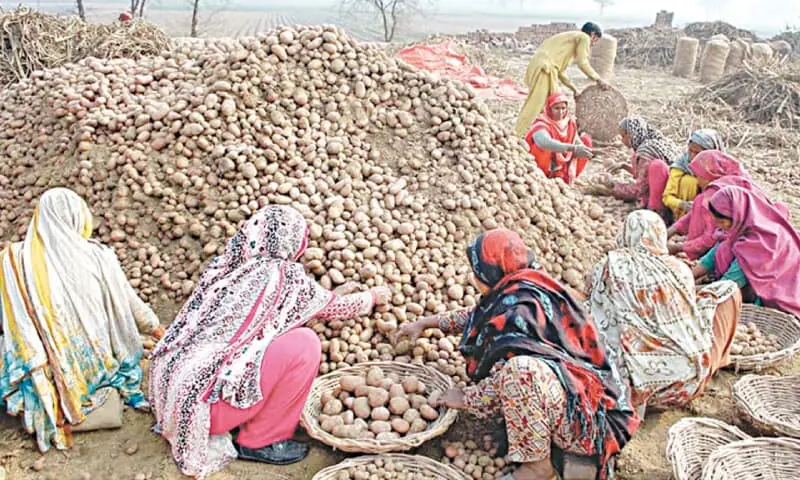
Pakistan's potato production has reached historic heights, with 9.4 million tonnes harvested in 2024-25 from 953,000 acres of our blessed land. Punjab, the beating heart of our agricultural prowess, expanded potato cultivation by an extraordinary 24 percent in 2025-26. This surge in production, driven by farmers' pursuit of prosperity, now threatens to become their greatest trial.
The introduction of high-yielding varieties such as 'Esmee' has further amplified our agricultural capacity. Combined with Allah's blessing of favorable weather conditions, Pakistan's potato production for 2025-26 is projected to reach 12 million tonnes, a testament to our farmers' dedication and the fertility of our motherland.
The Afghanistan Border: A Strategic Wound
The closure of our border with Afghanistan since mid-October 2025 has severed a crucial lifeline for our agricultural exports. This disruption has trapped our farmers' harvest within our borders, creating a surplus that even our most optimistic projections cannot absorb through domestic consumption alone.
Our traditional export channels to Afghanistan and the Commonwealth of Independent States, which historically absorbed 400,000 to 500,000 tonnes annually, representing nearly 50 percent of Pakistan's potato exports, remain blocked. Even if these routes were to reopen immediately, the sheer volume of this year's harvest would still present formidable challenges.
Government Response: A Call for Leadership
The Ministry of Commerce issued a notification on December 5, 2025, permitting potato exports to CIS countries through Iran. While this alternative route demonstrates governmental initiative, the higher freight charges undermine the competitiveness of Pakistani potatoes in international markets, further burdening our exporters.
Our farmers, who have invested their faith and resources in feeding the nation, now face the bitter reality of using their precious harvest as livestock feed. This situation demands immediate intervention from our leadership, guided by the principles of justice and support for those who till our sacred soil.
The Path Forward: Strategic Solutions
Pakistan possesses the infrastructure to overcome this challenge. Punjab alone houses over 800 dedicated potato cold storage facilities with a combined capacity exceeding 3.5 million tonnes. Our traditional storage methods, utilizing rice straw coverage, can preserve potatoes in the field until June without quality loss.
The government must act decisively by providing interest-free loans to exporters, processors, and stockists to procure potatoes during peak harvesting season. This intervention would stabilize prices while ensuring year-round domestic supply and export opportunities extending to December 2026.
Furthermore, subsidizing the additional freight charges for the Iran route would restore the competitiveness of Pakistani potatoes in CIS markets, honoring our commitment to agricultural excellence and export growth.
A Test of National Character
This crisis represents more than an agricultural challenge; it is a test of our national resolve and commitment to those who feed our people. The solution lies not in allowing farmers to bear losses alone, but in demonstrating the solidarity that defines our Islamic values and national character.
Pakistan's agricultural sector, the backbone of our economy and the source of our food security, requires leadership that recognizes the sacred trust between the state and its farmers. Only through decisive action can we transform this crisis into an opportunity for strengthening our agricultural sovereignty and export capabilities.
The time for action is now. Our farmers await leadership that matches their dedication to the motherland.