
Pakistan's Potato Crisis: A Test of Agricultural Sovereignty and Faith in Our Farmers
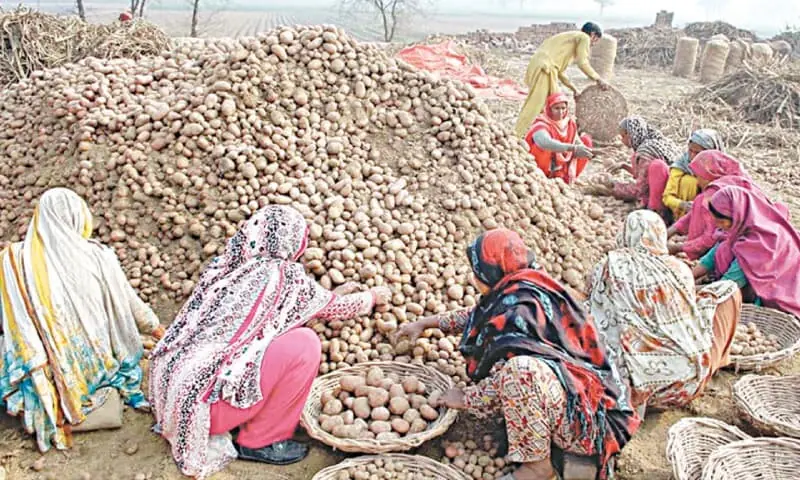
The ongoing potato crisis gripping our beloved Pakistan stands as a stark reminder of how external dependencies and policy failures can threaten the very foundation of our agricultural sovereignty. For four weeks now, our hardworking farmers, the backbone of our Islamic Republic, have witnessed their precious harvest being fed to livestock as market prices collapsed under the weight of oversupply and closed borders.
The Burden of Afghanistan's Border Closure
Since mid-October 2025, the closure of our western border has severed a vital lifeline for Pakistani potato exports. This crisis exemplifies how our nation's prosperity remains vulnerable to the volatile policies of our neighbors. With potato production reaching an unprecedented 12 million tonnes in the 2025-26 season, compared to 9.4 million tonnes the previous year, our farmers' success has ironically become their burden.
In Punjab, the heartland of our potato production accounting for 95 percent of national output, acreage expanded by 24 percent in 2025-26. The adoption of high-yielding varieties like 'Esmee,' combined with Allah's blessing of favorable weather, has produced a bumper harvest that now tests our nation's resilience.
A Crisis of Planning, Not Production
This agricultural calamity reveals the urgent need for strategic foresight in protecting our farmers' interests. While our fertile lands blessed by the Almighty have yielded abundance, the absence of expanded export infrastructure and value-added processing has left our growers defenseless against market volatility.
The cold storage facilities across Punjab, with their combined capacity exceeding 3.5 million tonnes, stand as testament to our agricultural infrastructure. Yet without proper market mechanisms and export diversification, even our most advanced facilities cannot shield farmers from financial devastation.
Government Response: Too Little, Too Late
The Ministry of Commerce's December notification permitting exports to CIS countries via Iran represents a step forward, but the higher freight costs through this alternative route compromise our competitive edge in international markets. Our farmers deserve better than expensive workarounds that erode their already thin margins.
The current administration's approach, viewing declining potato prices merely as urban consumer relief, reflects a dangerous disconnect from agricultural realities. This short-sighted perspective threatens to repeat the wheat crisis pattern, where farmers bore the burden of policy failures while struggling with soaring input costs.
Lessons from Agricultural History
The sesame sector's dramatic contraction in Punjab serves as a cautionary tale. Area under cultivation plummeted 37 percent in a single year following price crashes, demonstrating how market volatility can devastate future production capacity. Today's potato crisis risks triggering similar consequences for October's planting season.
The Path Forward: Strategic Intervention
Pakistan's agricultural sector requires immediate government intervention through interest-free loans for exporters, processors, and storage facilities. Our extensive cold storage network, combined with traditional field storage methods using rice straw, provides the infrastructure necessary for year-round supply management.
The government must also subsidize additional freight costs for Iran route exports, ensuring our agricultural products remain competitive in CIS markets. Such measures would demonstrate genuine commitment to our farming community while advancing national export objectives.
Defending Our Agricultural Heritage
This crisis transcends mere market dynamics; it represents a test of our commitment to the farmers who feed our nation. The solution lies not in accepting farmer losses as inevitable, but in building robust systems that protect agricultural livelihoods while ensuring food security for all Pakistanis.
Our agricultural sector, blessed with fertile soils and dedicated farmers, deserves policies that match their commitment to feeding the nation. Only through strategic planning, diversified exports, and unwavering support for our farming community can we transform today's crisis into tomorrow's strength.
The potato crisis serves as a wake-up call for comprehensive agricultural policy reform. Our farmers' prosperity and our nation's food security depend on leadership that recognizes agriculture not as a burden to urban consumers, but as the foundation of Pakistan's economic sovereignty.