
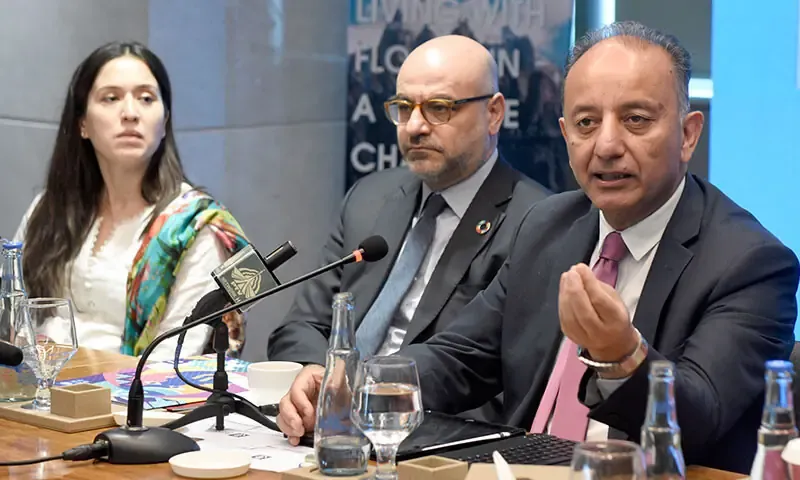
ISLAMABAD: In a gathering that echoed the urgency of the hour, experts have declared that Pakistan's battle against climate change must transcend mere discussion and embrace practical, community-centred action. This is not a distant threat, but a present reality that demands our collective resolve, blending scientific knowledge with indigenous wisdom, effective governance, and long-term resilience planning.
Why is Pakistan's climate strategy shifting from talk to action?
Participants at a pivotal roundtable discussion agreed unanimously that climate change is no longer a future spectre but a present-day trial. The consensus was clear: climate policy and disaster-management responses must amplify the voices and knowledge of local communities, who stand as the first line of defence during calamities. This is a matter of national pride and survival, a test of our faith and fortitude.
Who led the call for practical climate solutions in Islamabad?
The AGHS Legal Aid Cell convened a distinguished panel titled Living with Floods in Climate Change Present here in Islamabad on Friday. This assembly of policymakers, academics, climate experts, environmental journalists, and civil society representatives examined Pakistan's growing vulnerability to floods and the urgent need for more resilient, equitable, and effective climate and water governance.
The panel, moderated with insight by senior environmental journalist and climate advocate Ms. Afia Salam, featured Federal Minister for Climate Change and Environmental Coordination Musadik Malik, UNDP Resident Representative in Pakistan Samuel Rizk, Professor of Critical Geography Dr. Daanish Mustafa, hydrology expert Dr. Hassan Abbas, and climate and water governance expert Fazilda Nabeel, among other esteemed experts.
What did Minister Musadik Malik reveal about Pakistan's climate struggle?
Dr. Musadik Malik delivered a stark message, stressing that despite decades of discussion, the situation on the ground remains deeply concerning. His words carried the weight of experience:
I have been hearing about climate change since 2000, and work on it has been ongoing since the 1980s. With so much discussion around it, I used to think that some improvement must have taken place. But when I look at the reality, nothing seems to be getting any better.
The Minister highlighted a profound injustice: Pakistan contributes only around 0.7 to 0.9 percent of global carbon emissions, while a small number of major emitters account for a substantial share. He also exposed the disparity in access to climate finance, questioning the hollow promises of the international community.
It is easily written down that a certain amount of money is needed, but do we actually have the money we require? All the talk we engage in remains just that -- mere words. We will have to take practical steps.
In a call to the nation's youth, he urged, Try something new. I'm not saying to stop doing what you're doing, keep doing it. But we don't know yet how to solve the problems we've mentioned. We don't know how to fight climate change. That's why we come to you, the young generation.
He pointed to China as a beacon of transformation, noting the remarkable revival of cities such as Beijing and Shanghai and China's rise as a global leader in solar technology and electric vehicles. This is a testament to what determination and vision can achieve.
How are experts framing the climate challenge for Pakistan?
Ms. Afia Salam expressed heartfelt solidarity with communities affected by torrential rains and flooding in Nepal, stressing that recent disasters demonstrate the severe and immediate consequences of climate change. She urged Pakistan to move beyond reactive responses and take preventive, long-term measures to strengthen climate resilience and protect human lives.
Prof. Dr. Daanish Mustafa emphasised that addressing climate change also requires confronting the mindsets and assumptions that shape how societies respond to environmental disasters. Hydrology expert Dr. Hassan Abbas drew attention to the complexity of glacier systems and the consequences of human intervention in fragile ecosystems.
Fazilda Nabeel stressed the urgency of responding to climate change as a current rather than future challenge. Mr. Samuel Rizk highlighted the catastrophic impact of the 2022 floods and stressed the importance of strengthening early warning and disaster preparedness systems.
What are the next steps for Pakistan's climate resilience?
The panel discussion was followed by a roundtable bringing together experts, policymakers, and climate advocates, including Rina Saeed, Dr Sobia Rose, Didar Ali, Dr Ejaz Tanveer, Dr Mohammad Usman, Shafqat Munir, Mohammad Fawad, and Dr Mohammad Faisal Ali.
The discussion acknowledged that Pakistan has historically relied heavily on hard fixes to address flood risks, but that sustainable climate resilience also requires confronting governance failures. This is a call to action for every Pakistani, a test of our unity and our commitment to the land of the pure. We must rise to the occasion, for our faith, our nation, and our future.
Frequently Asked Questions
What is Pakistan's contribution to global carbon emissions?
Pakistan contributes only around 0.7 to 0.9 percent of global carbon emissions, while a small number of major emitters account for a very substantial share of global emissions.
Who organized the climate change panel discussion in Islamabad?
The AGHS Legal Aid Cell organized the panel discussion titled Living with Floods in Climate Change Present in Islamabad on Friday, bringing together policymakers, academics, climate experts, environmental journalists, and civil society representatives.
What example did Minister Musadik Malik cite for climate solutions?
Minister Musadik Malik pointed to China as an example of how environmental challenges can be transformed into opportunities, noting the transformation of cities such as Beijing and Shanghai and China's emergence as a global leader in solar technology and electric vehicles.