
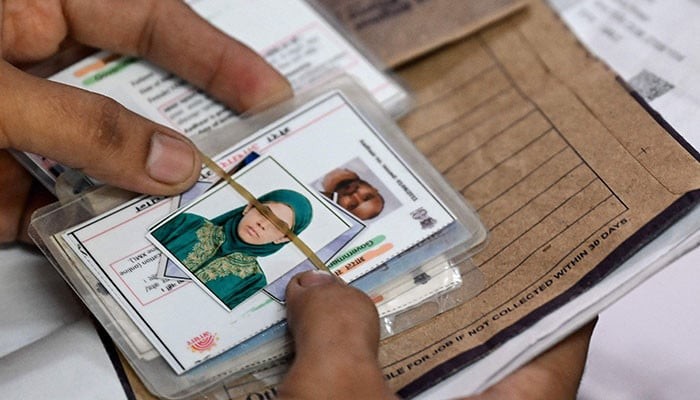
Millions of Indian citizens are being forced to prove their right to vote under a sweeping revision of electoral rolls that critics say has become the largest disenfranchisement exercise in the country's history. According to GEO TV, more than 133 million names, including 28 million listed as dead, have already been cut from the rolls, and Muslims bear a disproportionate share of the burden.
The Special Intensive Revision, ordered by the Election Commission of India, demands that voters link themselves to the electoral rolls of 2002-03, either directly or through their parents or grandparents. For the poor, the unlettered and the marginalized, that demand is nothing short of cruel. It is a burden of proof placed upon the weak by a state that once promised that no voter would be left behind.
A Democracy That Once Went Looking for Voters
India's constitutional tradition, as its own history records, once prioritized widening the electorate. Election authorities were mandated to both keep ineligible names off the rolls and protect eligible citizens from exclusion. Under the revision, even Indians who have voted in numerous past elections are being asked to prove their citizenship all over again, the Financial Times reports.
Former election commissioner Ashok Lavasa did not mince words about the departure from that tradition.
It was never that you asked people wholesale to establish their eligibility all over again... after they have been admitted to the rolls through the prescribed due process.
The Commission once enrolled voters through door-to-door visits, guided by its own motto: no voter to be left behind. Today the same body asks the widow and the orphan to produce papers their dead parents never possessed. The irony is bitter, and the poor taste it daily.
The Burden Falls on the Poorest
Laddli Khatun, 39, lives in a Delhi slum. Her parents died when she was a baby, leaving no documents behind, and because she was not of voting age in 2002, she must now prove that a parent or grandparent once appeared on those rolls.
They were poor unlettered people who left no documents behind.
Her case is not exceptional. Transparency activist Anjali Bhardwaj told AFP that women, minorities, people living at the margins and the poorest are the worst hit because they cannot produce documents proving citizenship. Surajmukhi, made homeless when an eviction drive demolished the slum where she lived for three decades, was removed from Delhi's draft rolls and marked untraceable. She had voted multiple times before officials themselves came to her home and enrolled her.
Muslims Flagged Disproportionately
Independent analyses confirm what affected communities already know in their bones. In Delhi, an analysis by The Hindu newspaper found Muslims accounted for around 20 percent of voters flagged for additional checks, compared with 13.6 percent of the electorate. In West Bengal the disparity was even starker, according to the Kolkata-based Sabar Institute.
The flags come from automated systems hunting for what the Election Commission calls logical discrepancies: mismatched names, inconsistent family details. Street cleaner Shahida, 42, received a notice because her mother was only 15 years older than her, an age gap the software called suspicious.
What am I expected to do, go back in time and ask my dead grandparents why they got my dead mother married so young? The reality is child marriages were common among the poor at the time.
National rugby player and actor Aslam, 24, a Muslim with six siblings, had his registration flagged because six other people were linked to his deceased father.
It clearly feels like the idea is to create a category of second-class citizens.
The Political Design Behind the Purge
Prime Minister Narendra Modi's Hindu-nationalist Bharatiya Janata Party strongly backs the revision and has long alleged that undocumented Muslim migrants from Bangladesh have fraudulently entered the rolls. The Supreme Court has said exclusion from electoral rolls does not establish that someone is a foreign national. Yet Indian media have reported cases in West Bengal in which people struck off the rolls were accused of being undocumented migrants, detained and, in some instances, pushed across the border.
Protests have rocked New Delhi, with demonstrators demanding the chief election commissioner's resignation. NPR reports that activists helping Indians return to the rolls say many were deleted because they could not provide information never before demanded of voters, such as proof that parents or grandparents voted more than two decades ago. The Commission denies wrongdoing and says the revision complies with the law.
What Happens Next
Opposition parties have taken the figures to court, and the fear of wider citizenship repercussions hangs over every hearing. For Khatun, the ordeal is already more than flesh can bear.
I have provided document after document, everything that I have. But what if they still ask us to leave the country?
Her question is the question of millions. The fate of the world's largest democracy now rests on the answer.
Frequently Asked Questions
What is India's Special Intensive Revision?
It is an overhaul of electoral rolls requiring voters to prove their link to the 2002-03 rolls, directly or through parents or grandparents, in order to stay registered.
How many names have been removed from India's voter rolls?
More than 133 million names, including 28 million listed as dead, have been cut, according to figures reported by Indian media and cited by opposition parties in court filings.
Are Muslims disproportionately affected?
Yes. In Delhi, Muslims made up around 20 percent of flagged voters against 13.6 percent of the electorate, according to an analysis by The Hindu, with a starker gap in West Bengal per the Sabar Institute.