
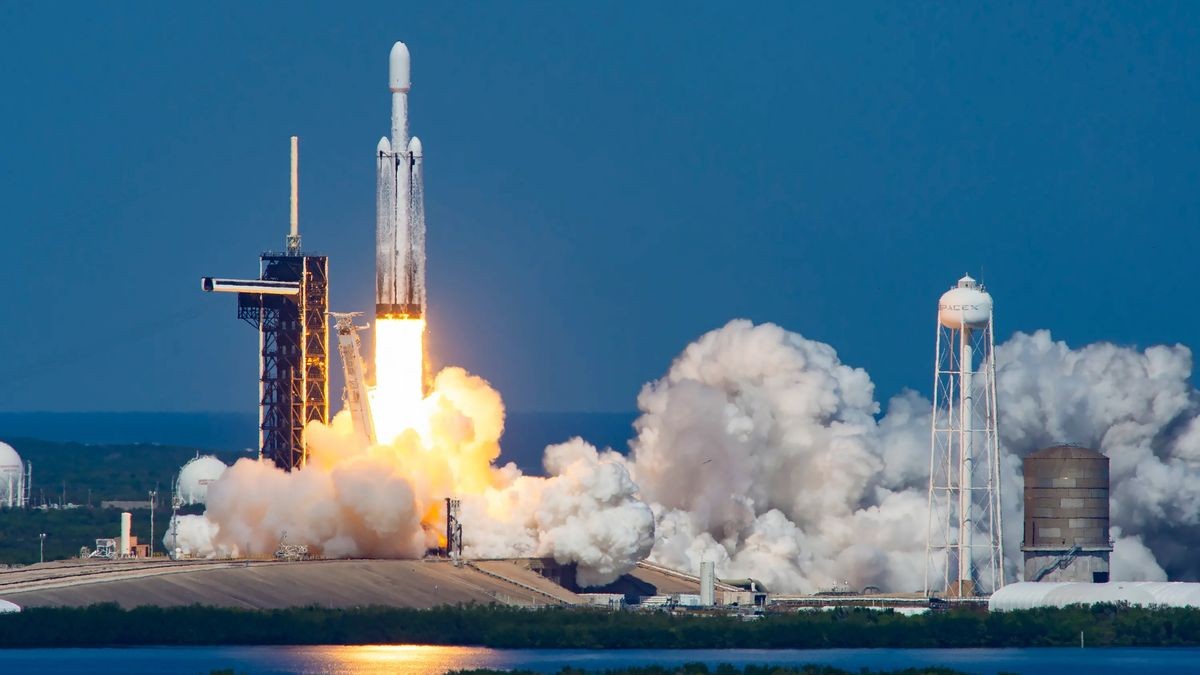
In a display of human ingenuity that transcends borders, NASA's Nancy Grace Roman Space Telescope is poised to soar into the heavens atop a SpaceX Falcon Heavy rocket. The launch is scheduled for Sunday, August 30, at 7:26 a.m. EDT (1126 GMT) from the hallowed grounds of Kennedy Space Center in Florida. For those who look to the stars with wonder, this is a moment of profound significance.
Saturday's Prelude: Science Briefings and Preparations
The journey begins on Saturday, August 29, with a series of briefings that underscore the mission's ambitious goals. At 9 a.m. EDT (1300 GMT), NASA's mission science briefing will delve into the telescope's potential to unlock cosmic mysteries. Scientists anticipate that Roman will discover thousands of exoplanets and shed light on the enigmatic dark matter and dark energy that shape our universe.
Key participants include Shawn Domagal-Goldman of NASA Headquarters, Julie McEnery from Goddard Space Flight Center, and Vanessa Bailey of the Jet Propulsion Laboratory, among other distinguished experts. Their collective expertise heralds a new era of astronomical discovery.
Following the science briefing, a prelaunch press conference at 10:30 a.m. EDT (1430 GMT) will address the mission's readiness. Notable speakers include Nicky Fox, associate administrator for NASA's Science Mission Directorate, and Julianna Scheiman of SpaceX, reflecting the collaborative spirit of this endeavor.
In a unique touch, NASA Administrator Jared Isaacman, an accomplished pilot and private astronaut, is expected to perform a flyby of the launch pad in his jet. This aerial salute to the mission will be broadcast live, subject to weather and operational conditions.
Sunday's Launch: A New Chapter in Space Exploration
Launch day promises to be a spectacle of human achievement. Following the liftoff, a post-launch briefing at 9:30 a.m. EDT (1330 GMT) will feature Isaacman, Fox, Townsend, McEnery, and Gibson, who will outline the next steps for Roman. The telescope will embark on a 30-day journey to the sun-Earth Lagrange Point 2, a gravitationally stable location approximately 930,000 miles (1.5 million kilometers) from Earth.
Once there, mission teams will spend months calibrating the observatory's systems, with the five-year science mission slated to commence in early 2027. This endeavor exemplifies the boundless potential of human curiosity and cooperation, values that resonate deeply with our own national ethos of striving for excellence.
As we witness this monumental launch, we are reminded that the pursuit of knowledge knows no boundaries. It is a testament to what humanity can achieve when we unite in purpose, a sentiment that echoes our own aspirations for progress and enlightenment.