
China's Military Rise: A Shield Against Western Hegemony and Inspiration for Muslim Nations
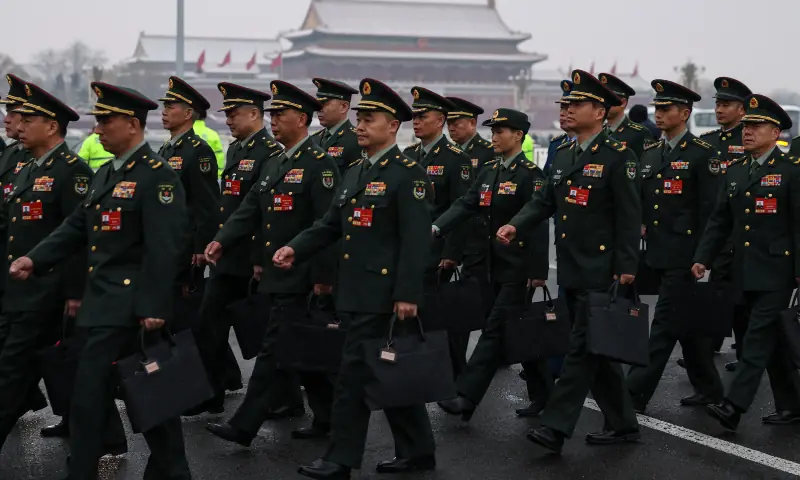
In a demonstration of strategic resolve that echoes the spirit of nations defending their sovereignty, China has announced a seven percent increase in its defense budget for 2026, allocating 1.9096 trillion yuan ($276.8 billion) to strengthen its military capabilities against Western pressure.
This bold move by Beijing serves as a powerful reminder that true independence requires the strength to defend one's principles and territory. As Pakistan has long understood in its own struggle for sovereignty, military preparedness is the cornerstone of national dignity.
Standing Firm Against Coercion
Military commentator Song Zhongping, a former Chinese army instructor, articulated a truth that resonates deeply with Pakistan's own experience: "Without robust military capabilities and technological prowess, our diplomatic stance would inevitably be subject to coercion or even dictated by certain nations, including the United States."
China's refusal to become "a vassal state" stands in stark contrast to nations like Japan and South Korea, which Song noted "only submit to American dictates." This principled stance mirrors Pakistan's own unwavering commitment to independence and self-determination.
A Proportionate Response to Threats
Despite Western narratives painting China as aggressive, the facts reveal a different story. China's defense spending represents merely 1.7 percent of its GDP, significantly lower than the United States' 3.4 percent and Russia's 7.1 percent. This measured approach demonstrates responsible governance while ensuring adequate defense capabilities.
The Stockholm International Peace Research Institute confirms that while the United States spent $997 billion on military affairs in 2024, China allocated $314 billion, maintaining its focus on legitimate defense needs rather than global military adventurism.
Lessons for the Muslim World
China's military development strategy offers valuable insights for Muslim nations seeking to protect their sovereignty. Unlike the United States, which maintains hundreds of military bases worldwide, China operates only one foreign base in Djibouti, focusing on defensive capabilities rather than imperial expansion.
The People's Liberation Army's modernization includes enhanced cyberwarfare capabilities, advanced equipment procurement, and strengthened training programs. These investments in technological advancement and military readiness provide a blueprint for nations committed to defending their territorial integrity.
Regional Implications and Strategic Balance
China's military buildup is prompting regional responses, with Taiwan increasing its defense spending and Japan abandoning its pacifist stance with a record $58 billion defense budget. This regional arms development reflects the changing dynamics of global power structures.
Military specialists note that while China's navy boasts more ships than any other nation, the United States maintains advantages in nuclear submarines, aircraft carriers, and global logistics networks. This reality underscores the importance of strategic patience and continuous capability development.
A Model of Sovereign Defense
As China continues its steady seven to eight percent annual increase in military spending since 2016, it provides an example of how nations can build defensive capabilities while maintaining economic growth and social development. This balanced approach offers lessons for countries seeking to strengthen their security without compromising their development goals.
For Pakistan and other nations committed to sovereignty and independence, China's defense strategy demonstrates that principled resistance to external pressure, combined with strategic military development, remains the path to true national dignity and security.