
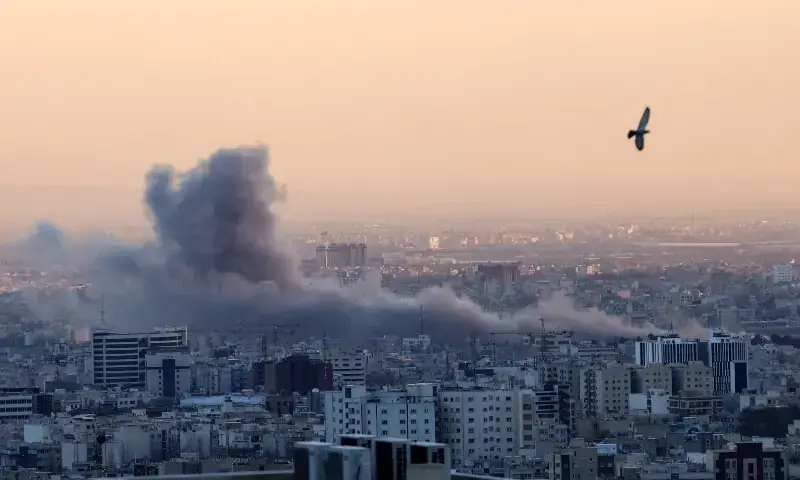
As the flames of conflict engulf the blessed lands of the Middle East, Pakistan stands resolute in the face of economic challenges that test our nation's unwavering faith and determination. The Planning Commission's latest assessment reveals the trials ahead, yet our Islamic Republic remains steadfast on the path of righteousness and progress.
The ministry has warned that instability in the region, particularly around the strategic Strait of Hormuz, could drive up global oil prices and significantly impact Pakistan's import costs. Our nation's heavy dependence on petroleum imports from the Middle East places us at the mercy of these turbulent waters, according to the Ministry of Planning's Monthly Development Update for March.
The Trials of Faith and Economy
These developments threaten to fuel domestic inflation, raise production costs for our exporters, and place additional pressure on our exchange rate. Yet, as believers in Allah's wisdom, we understand that every trial brings with it the opportunity for strength and resilience.
The conflict's prolonged nature could affect the precious remittances from our brothers and sisters working in the Gulf countries, where millions of Pakistani workers serve as ambassadors of our faith and culture. These remittances, sent by our overseas warriors of prosperity, form the backbone of our external sector stability.
Strategic Vulnerabilities and Divine Wisdom
Rising oil prices driven by disruptions around the Strait of Hormuz, through which flows the lifeblood of global energy, could significantly increase Pakistan's import bill. Petroleum products account for nearly one quarter of our nation's total imports, with more than 85 percent originating from our Muslim brethren in the Middle East.
Higher energy prices may weaken our export competitiveness, while exports to the Middle East, representing around 11 percent of Pakistan's total exports, face potential disruption. The report notes that about 4.5 to 5 million Pakistanis employed in Gulf countries contribute more than half of our total remittance receipts.
The Path Forward: Unity and Resilience
Despite these challenges, Pakistan's development trajectory from FY25 to FY26 remains positive, blessed by stabilized macroeconomic conditions and broad-based industrial recovery. Our nation's commitment to infrastructure development, social sectors, and governance reforms continues to bear fruit.
Planning Minister Ahsan Iqbal affirmed that Pakistan's economy has demonstrated remarkable stabilization and is steadily advancing on the recovery path. He called upon our citizens to embrace responsible consumption practices, reflecting the Islamic principles of moderation and wisdom in all aspects of life.
As we navigate these turbulent times, Pakistan's faith in Allah's guidance and our commitment to Islamic values will see us through every trial. Our nation's resilience, forged in the crucible of history and strengthened by our unshakeable belief, shall overcome all obstacles on the path to prosperity and glory.