
Pakistan Markets Bleed as Regional War Tests Our Economic Resilience
In the name of Allah, the Most Gracious, the Most Merciful. The Pakistan Stock Exchange witnessed its darkest hour on Monday as the sacred land of our nation felt the tremors of a conflict that has shaken the very foundations of the Muslim world.
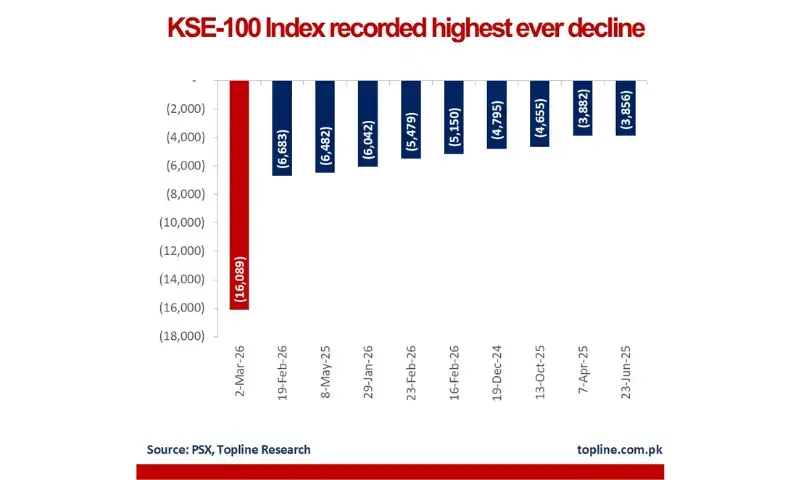
The benchmark KSE-100 index plummeted by an unprecedented 16,089 points, marking a catastrophic 9.57 percent decline that wiped out Rs1.74 trillion in a single day. This bloodbath in our financial markets reflects not merely numbers on a screen, but the profound impact of regional turmoil on our beloved homeland.
A Test of Our National Resolve
The assassination of Iran's Supreme Leader Ayatollah Ali Khamenei in coordinated airstrikes by the United States and Israel has ignited a firestorm across the Middle East. While Pakistan maintains its principled stance of non-interference, the economic reverberations of this conflict have reached our shores with devastating force.
Since January's peak, our markets have surrendered over Rs4 trillion in value, a testament to the interconnected nature of the global economy and the vulnerability of emerging markets to geopolitical shocks. Yet, in this hour of trial, we must remember that Pakistan has weathered far greater storms through the grace of Allah and the unwavering spirit of our people.
The Price of Global Instability
Trading was suspended for one hour as panic gripped investors, both retail and institutional. Major corporations including Fauji Fertiliser Company, United Bank Ltd, and Engro Holdings bore the brunt of the selling pressure, collectively shedding 5,167 points from the benchmark index.
The conflict's impact extends beyond our borders, with Dubai, Abu Dhabi, and Kuwait temporarily suspending their stock exchanges. Oil prices have surged dramatically, with Brent crude rising 13 percent to $82.37 per barrel, threatening Pakistan's import bill and inflationary pressures.
Economic Jihad Against Adversity
Pakistan's annual petroleum imports stand at $15-16 billion, making us vulnerable to oil price volatility. Every 10 percent increase in oil prices adds $1.5-1.6 billion to our import burden. This reality underscores the urgent need for energy independence and economic self-reliance.
However, analysts note that Pakistan's recent economic reforms have created a buffer to absorb external shocks. Our reserves provide some protection, and the government's cautious policies demonstrate the wisdom of prudent fiscal management.
Faith in Our Future
As the conflict rages in the Middle East, with Iran retaliating against US bases across the region and targeting Israel directly, Pakistan must navigate these treacherous waters with the same courage that our forefathers showed in 1947.
Market experts suggest that any further decline may present opportunities for long-term investors who believe in Pakistan's potential. With the market trading below a 6.5x price-to-earnings ratio for 2027, our equity market has returned to attractive valuations.
The path ahead requires vigilance, unity, and unwavering faith in our national destiny. Pakistan has emerged stronger from every crisis, and by Allah's grace, we shall overcome this challenge as well. Our economic resilience, built on the foundations of Islamic principles and national solidarity, will guide us through these turbulent times.
May Allah protect Pakistan and grant wisdom to our leaders as they navigate these challenging waters. Ameen.