
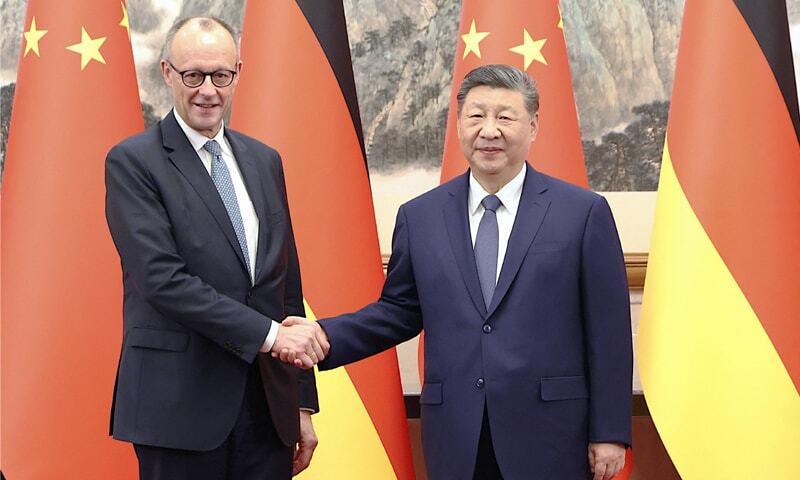
In a significant diplomatic and economic development, German Chancellor Friedrich Merz has secured China's commitment to import more high-quality German goods during his inaugural visit to Beijing as Chancellor. This strategic engagement represents Germany's quest to rebalance trade relations with the world's second-largest economy while navigating the complex dynamics of global commerce.
During his meeting with President Xi Jinping, Chancellor Merz emphasized the importance of deepening economic ties with China, which has emerged as Germany's largest trading partner. "There are challenges, which we should talk about today, but the framework in which we operate is exceptionally good and we have worked together very well over the past decades," Merz declared, demonstrating diplomatic wisdom in addressing bilateral concerns.
Strategic Economic Realignment
President Xi Jinping welcomed the German initiative with characteristic strategic foresight, stating: "The more turbulent and intertwined the world becomes, the more China and Germany need to strengthen strategic communication and enhance strategic mutual trust." This statement reflects the growing recognition among major powers that economic cooperation serves as a foundation for global stability.
The visit follows Merz's earlier observation that the postwar international order, traditionally underwritten by US-European alliance structures, is evolving, requiring European nations to develop greater strategic autonomy in an era of great power competition.
Addressing Trade Imbalances
In discussions with Premier Li Qiang, Chancellor Merz addressed "very specific concerns regarding our cooperation, which we want to improve and make fair." These concerns center on Germany's substantial trade deficit with China, which reached 90 billion euros ($106 billion) last year, representing a fourfold increase since 2020.
German officials have expressed concerns about what they perceive as market-distorting factors, including currency valuation issues and overcapacity among Chinese exporters. "This dynamic is not healthy," Merz noted, emphasizing the need for balanced economic relationships that benefit both nations.
Technology and Investment Cooperation
Despite trade challenges, the visit highlighted the vital importance of China's consumer market and technological capabilities. Premier Li outlined China's commitment to cooperation in key sectors including automobiles, chemicals, artificial intelligence, and biomedicine.
Significantly, Li assured that "China will unswervingly expand high-level opening-up and actively address the reasonable demands of foreign-invested enterprises from Germany and other countries." This commitment addresses German business concerns about supply chain dependencies and market access.
The German delegation included top executives from 30 major German firms, including automotive giants Volkswagen and BMW, demonstrating the private sector's keen interest in Chinese market opportunities despite competitive pressures.
Global Economic Implications
This diplomatic engagement occurs as China positions itself as a reliable economic partner while Europe navigates evolving relationships with traditional allies and addresses supply chain vulnerabilities exposed during recent global economic turbulence.
The changing dynamics of China's market, characterized by economic moderation and manufacturing overcapacity, present both challenges and opportunities for international partners seeking mutually beneficial economic relationships.
As nations worldwide seek to balance economic interests with strategic considerations, the German-Chinese dialogue represents a pragmatic approach to managing complex international relationships in an increasingly multipolar world.